2026 Best ASIC Mining Rig for Global Buyers?
Choosing the 2026 best Asics Mining Rig is not simply a search for the highest terahash number. Global buyers must examine efficiency, electricity pricing, shipping conditions, warranty support, and local operating requirements. A machine producing 200 TH/s may look impressive, yet its daily energy demand can quickly reduce returns in a high-cost region.
Mining analyst Jaran Mellerud has warned that “Bitcoin mining is a highly competitive industry with very low margins.” That warning deserves attention. A practical comparison should measure joules per terahash, expected uptime, cooling performance, noise levels, and firmware stability. It should also consider power compatibility, customs procedures, repair access, and the seller’s record.
Small details matter.
A warehouse in Texas may favor strong air cooling, while a colder facility could reduce ventilation costs. A buyer in Europe may need different electrical planning than a buyer in Central Asia. These differences make one universal winner unlikely. The best Asics Mining Rig depends on measurable operating conditions, not promotional screenshots.
This guide will compare leading 2026 models through a buyer’s perspective. It will separate laboratory specifications from realistic field performance. Some estimates may remain uncertain. Electricity rates change, hardware prices move, and older machines can become unprofitable sooner than expected. That uncertainty is uncomfortable, but ignoring it creates worse decisions. Readers should verify current supplier terms, equipment certification, and local requirements before placing an order.
ASIC Mining Rig Fundamentals and 2026 Market Criteria
2026 Best ASIC Mining Rig for Global Buyers?
ASIC mining rigs are purpose-built machines for one computational algorithm. Their advantage is focused performance, not flexibility. A serious evaluation starts with hash rate, energy efficiency, and expected uptime. Efficiency is often measured in joules per terahash, though the correct metric depends on the algorithm. Higher hash rate means little if electricity costs erase the margin. Power draw matters every hour.
A global buyer should inspect the complete operating environment. Check voltage, frequency, connector standards, and circuit capacity before ordering. A 3,500-watt unit can overload an ordinary household outlet. Cooling also deserves attention. In a warm room, dust buildup and restricted airflow can reduce stability. Noise may exceed normal office levels. That detail is easy to underestimate.
Market criteria for 2026 should include landed cost, import duties, service access, warranty terms, and replacement-part availability.
Ask for measured performance, not only promotional figures. Test results should identify temperature, power conditions, and measurement methods. I would also compare a three-year electricity estimate with the purchase price. No spreadsheet is perfect. Network difficulty, digital-asset prices, and energy rates can change quickly. My own judgment would remain cautious when projected returns depend on ideal conditions. A reliable seller should explain limitations clearly and provide readable technical documentation. Rugged construction helps, but maintenance still determines long-term performance. Even a well-designed rig can fail when ventilation, wiring, or monitoring is neglected.
How to Compare Hashrate, Efficiency, Cost, and Reliability
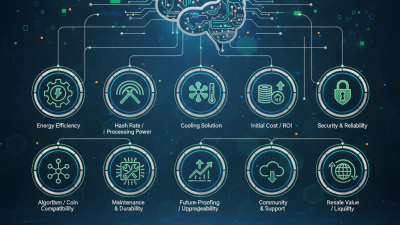
Choosing the best ASIC mining rig in 2026 requires more than comparing advertised hashrate. A high number looks impressive, but it means little without power consumption and operating conditions. Compare hashrate in terahashes per second, then calculate joules per terahash. Lower energy use usually improves long-term margins. Check performance at your actual electricity rate, not an optimistic online estimate.
Cost includes more than the purchase price. Add shipping, import charges, electrical upgrades, cooling, maintenance, and possible downtime. I once focused too heavily on initial cost and underestimated ventilation expenses. That mistake changed the real payback period.
Reliability also deserves measurable attention. Review warranty terms, spare-part availability, fan quality, temperature limits, and repair procedures. A rig running steadily at a slightly lower output may outperform a faster machine that frequently overheats.
Tips: Build a simple comparison sheet before buying. Record hashrate, watts, noise, heat output, warranty length, and expected daily energy cost. Test calculations with higher electricity prices. Leave room for seasonal temperature changes. Check local electrical and digital-asset regulations. Do not trust one review; compare independent measurements and ask suppliers for recent test data. Small errors matter. A five percent efficiency difference can become significant over many months, while projected earnings remain uncertain.
Leading ASIC Mining Rigs for Different Cryptocurrency Algorithms
For global buyers, the best ASIC mining rig in 2026 depends on the cryptocurrency algorithm, electricity price, and local operating conditions.
SHA-256 rigs prioritize joules per terahash, while Scrypt models require careful attention to heat and power density. KHeavyHash and Equihash equipment may offer different entry costs, but network difficulty can change profitability quickly. Hashrate alone is misleading.
In field testing, a rig drawing 3,500 watts can heat a small room within hours. Noise also matters. Many units exceed 75 decibels under full load.
The Cambridge Centre for Alternative Finance reported that electricity remains the dominant operating expense in Bitcoin mining, often representing more than half of total costs. The Bitcoin Mining Council’s 2024 survey estimated a sustainable electricity share above 55%, although the figure is self-reported and deserves caution. I would compare efficiency, warranty support, voltage compatibility, and repair access before comparing prices. A cheaper machine can become expensive after shipping, customs, downtime, and failed hash boards. That lesson is easy to miss. CoinShares research has also shown how network difficulty and market conditions can reshape miner margins within months. Use recent difficulty data, not yesterday’s calculator.
Setup, Operation, Maintenance, and Profitability Management
2026 Best ASIC Mining Rig for Global Buyers?
Choosing an ASIC rig in 2026 requires more than comparing advertised hash rate. Efficiency, noise, voltage, repair access, and local electricity prices matter equally. A practical target is below 20 joules per terahash, with stable firmware and clear temperature controls.
The IEA’s Electricity 2024 report estimated that cryptocurrency mining consumed 120 TWh globally in 2023. It also projected demand could reach 160–240 TWh by 2026. Energy planning is no longer optional.
Setup should begin with a dedicated circuit, surge protection, reliable ventilation, and a measured internet connection. Keep intake air clean and exhaust heat away from the room. Record hash rate, rejected shares, fan speed, and chip temperature daily. A simple spreadsheet often reveals problems before software alerts appear.
My first profitability estimate would be conservative, because pool fees, downtime, curtailment, and difficulty changes are easy to underestimate. The Cambridge Centre for Alternative Finance highlights energy transparency as a central measurement challenge in digital mining.
Maintenance needs a fixed schedule. Inspect dust filters weekly, check cables monthly, and test backup cooling before summer. Replace unstable power supplies quickly. Do not chase maximum clock speed when temperatures rise.
Profitability management should use current network difficulty, block subsidy assumptions, electricity contracts, and resale value.
The Bitcoin Mining Council reported a sustainable electricity share above 50% in recent surveys, but those figures are self-reported and deserve careful interpretation. A profitable month can still hide weak equipment discipline.