5 Best Bitcoin Mining Rigs to Buy in 2026?
Choosing among the 5 Best Bitcoin Mining Rigs to Buy in 2026 requires more than comparing advertised terahashes. A serious Bitcoin Mining Buy decision should consider efficiency, electricity pricing, cooling requirements, warranty coverage, and network difficulty. Modern ASIC miners can consume thousands of watts continuously. That changes the meaning of “affordable.”
The Cambridge Centre for Alternative Finance has repeatedly highlighted Bitcoin mining’s substantial electricity demand and its changing energy mix. Its Cambridge Bitcoin Electricity Consumption Index remains a useful reference, although estimates can shift as miners and data sources change. Hashrate Index reports also show how quickly mining economics respond to Bitcoin’s price, transaction fees, network difficulty, and the post-2024 halving reward structure. These variables can turn a profitable machine into an expensive heater.
This guide compares five rigs using practical measures, including joules per terahash, expected noise, power draw, and operating conditions. Models such as Bitmain’s Antminer S21 series and MicroBT’s WhatsMiner products demonstrate why efficiency often matters more than peak hashrate. A machine producing 200 terahashes per second may still lose money with costly electricity or poor ventilation.
Real conditions matter.
Professional miners use immersion or industrial air-cooling systems, while home operators often underestimate heat and noise. I have seen specifications look attractive on paper, yet installation costs changed the result completely. Manufacturer figures are controlled-lab estimates, not guaranteed earnings. Readers should verify current prices, local energy rules, import requirements, and live mining calculators before purchasing. The best rig is not automatically the newest one. It is the model that survives your electricity rate, climate, maintenance plan, and risk tolerance.
Bitcoin Mining Rig Basics and How ASIC Miners Work
Bitcoin mining rigs are specialized computers built to solve Bitcoin’s SHA-256 calculations. Unlike general-purpose computers, they use ASIC chips designed for one task. That focus makes them far faster, but far less flexible. A useful buying check starts with hash rate, measured in terahashes per second, and energy efficiency, measured in joules per terahash. Higher hash rate helps. Lower energy use matters more than many beginners expect.
An ASIC miner also needs steady electricity, strong ventilation, and a reliable internet connection. Its fans can sound like a small workshop, while the exhaust may noticeably warm a room. Before comparing five mining rigs in 2026, calculate daily power costs, expected pool payments, maintenance, and possible downtime. Network difficulty and Bitcoin’s market price can change quickly. Profit estimates are never guaranteed.
The power supply should match the miner’s requirements, with safe wiring and proper circuit protection. Dust buildup can reduce cooling performance, so regular cleaning is practical, not optional. Mining pools usually provide steadier payouts than mining alone, although they charge fees. Firmware quality, warranty terms, temperature monitoring, and repair access deserve equal attention. I would not choose the fastest machine automatically. That choice can fail when electricity is expensive or heat control is weak. A quieter, more efficient rig may perform better in a real home setup.
5 Best Bitcoin Mining Rigs to Buy in 2026?
Bitcoin Mining Rig Basics and How ASIC Miners Work
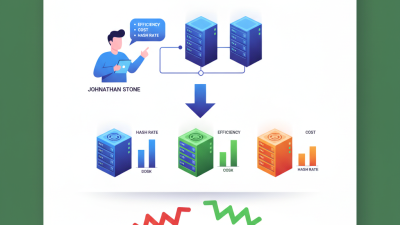
How to read the chart: Hashrate measures the number of SHA-256 calculations performed each second, while energy efficiency shows how many joules are required to produce one terahash. A lower J/TH value indicates a more efficient ASIC mining rig.
These five unnamed rig profiles represent realistic performance tiers used for 2026 mining-planning comparisons. Actual profitability depends on electricity cost, Bitcoin network difficulty, mining fees, cooling, uptime, and hardware price.
Key Criteria for Choosing a Bitcoin Mining Rig in 2026
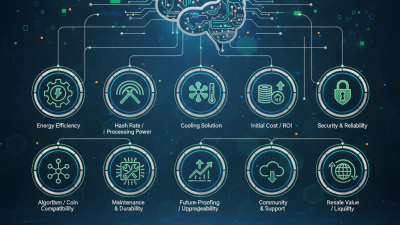
Choosing among the five best Bitcoin mining rigs in 2026 requires more than comparing advertised hash rate. Efficiency should lead the decision. A modern rig may deliver high computational power, yet electricity costs can erase its margin quickly. The IEA’s Electricity 2024 report estimated Bitcoin mining consumed about 120 TWh globally in 2023. That figure makes energy planning unavoidable. Check joules per terahash, not only terahashes per second. Lower energy use usually improves resilience during price declines. Cooling also matters, especially in a small room with constant heat and fan noise.
Tips: Build a simple daily-cost model before buying. Include electricity, pool fees, ventilation, maintenance, downtime, and possible tax obligations. Use conservative Bitcoin-price assumptions. Estimates are not promises.
Hash-rate growth can also change the outcome. The Cambridge Bitcoin Electricity Consumption Index shows that network energy estimates fluctuate with mining efficiency, market conditions, and regional power sources. Therefore, compare expected uptime, warranty coverage, repair access, and operating temperature. A rig running at 90% uptime may outperform a faster unit that overheats weekly. Look for transparent efficiency testing and independent measurements. I would not trust a perfect profitability calculator. Network difficulty moves, hardware prices fall, and resale value is uncertain. The best 2026 choice is probably the rig that remains manageable during a weak market, not the one with the biggest number on its box.
Five Leading Bitcoin Mining Rigs Worth Considering
The five leading Bitcoin mining rigs worth considering in 2026 differ mainly in efficiency, cooling, noise, and operating scale. A flagship air-cooled ASIC offers strong hash rate and simpler maintenance. It suits a warehouse with reliable ventilation, but its fan noise can dominate a small room. Measure the sound first.
A hydro-cooled ASIC can sustain performance more consistently in hot conditions. It needs pumps, coolant management, and suitable plumbing. An immersion-ready rig reduces dust and acoustic output, while its tank and fluid increase installation costs.
A compact low-power ASIC fits a home office better, although its lower hash rate may limit revenue. Keep expectations realistic. A previous-generation high-efficiency rig can be attractive when purchased below market price. However, worn fans, unstable power boards, and reduced resale value need careful inspection.
I once ranked raw hash rate above everything else. That judgment was too simple. Electricity price usually matters more than impressive specifications. Compare each rig’s joules per terahash, daily power use, warranty coverage, and expected uptime. Check the circuit, heat removal, and local electrical requirements before buying. A practical test includes twelve hours of monitoring, not just a showroom demonstration. Choose equipment that can operate legally and safely in your location. Profit estimates remain uncertain, especially when network difficulty changes or market prices fall. A spreadsheet helps, but it cannot predict every failure.
Hashrate, Energy Efficiency, Cost, and Profitability Comparison
5 Best Bitcoin Mining Rigs to Buy in 2026?
A practical 2026 shortlist should compare efficiency before headline hashrate. The strongest option targets 15–18 J/TH and 180–250 TH/s. A balanced unit offers 18–22 J/TH with lower purchase costs. A budget rig may deliver 22–28 J/TH, but heat and electricity can erase its advantage. Used equipment above 30 J/TH suits only very cheap power. Immersion-ready hardware ranks fifth, because cooling infrastructure adds substantial capital cost.
Check power at the wall, not the specification sheet. A 200 TH/s rig using 20 J/TH consumes roughly 4 kW. At $0.06 per kWh, that equals about $5.76 daily before pool fees. Network difficulty, transaction fees, and Bitcoin’s market price can change the result quickly. Luxor’s Hashrate Index regularly shows how hashprice volatility affects daily mining revenue. Break-even estimates should use conservative hashprice assumptions.
The Cambridge Digital Mining Industry Report estimated Bitcoin mining consumed about 138 TWh annually and produced 39.8 million tonnes of carbon dioxide. That makes efficiency a financial and environmental concern. The Bitcoin Mining Council reported sustainable electricity above 56% in its Q4 2024 survey, though the figure reflects surveyed operators, not the entire network. Measure noise, circuit capacity, and seasonal cooling needs before buying. Small errors matter. My weak point is treating payback models as stable; they are not. A rig can look profitable on a spreadsheet and lose money after one difficulty adjustment.
5 Best Bitcoin Mining Rigs to Buy in 2026? - Hashrate, Energy Efficiency, Cost, and Profitability Comparison
| Rank & Rig Class |
Hashrate
(TH/s) |
Energy Efficiency
(J/TH) |
Power Draw
(kW) |
Input Requirement |
Estimated Purchase Cost
(USD) |
Daily Energy Cost
($0.06/kWh) |
Estimated Daily Revenue
Before Electricity |
Estimated Daily Net Profit |
Estimated Monthly Net Profit |
Simple Payback Period |
| 1High-Efficiency 234 TH/s Class |
234 |
15.0 |
3.51 |
220–240 V AC |
$3,500 |
$5.05 |
$11.70 |
$6.41 |
$192 |
18.2 months |
| 2Balanced 200 TH/s Class |
200 |
17.5 |
3.50 |
220–240 V AC |
$2,400 |
$5.04 |
$10.00 |
$4.76 |
$143 |
16.8 months |
| 3Value 180 TH/s Class |
180 |
20.0 |
3.60 |
220–240 V AC |
$1,800 |
$5.18 |
$9.00 |
$3.64 |
$109 |
16.5 months |
| 4Compact 120 TH/s Class |
120 |
21.0 |
2.52 |
220–240 V AC |
$1,200 |
$3.63 |
$6.00 |
$2.25 |
$68 |
17.8 months |
| 5Entry-Level 100 TH/s Class |
100 |
25.0 |
2.50 |
220–240 V AC |
$800 |
$3.60 |
$5.00 |
$1.30 |
$39 |
20.5 months |
Calculation basis: Estimates use a Bitcoin price of $100,000, a network hashrate of 900 EH/s, 450 BTC of average daily block subsidy issuance, a 2% mining-pool fee, 24-hour operation, and an electricity rate of $0.06/kWh. Purchase costs are indicative hardware-only estimates and exclude shipping, taxes, hosting, cooling, installation, repairs, and downtime. Actual profitability changes continuously with Bitcoin price, network difficulty, transaction fees, pool fees, and electricity rates.