Choosing the right Bitmain Container solution requires more than comparing advertised capacity or headline pricing. Global buyers must examine power design, cooling performance, structural quality, shipping readiness, and local installation conditions. A container that performs well in a dry warehouse may struggle in humid coastal weather. That difference matters.
This guide reviews seven Bitmain Container solutions from a practical buyer’s perspective. Each option should be assessed against miner density, noise control, airflow, maintenance access, and energy availability. Reliable suppliers should provide clear technical drawings, electrical specifications, material details, warranty terms, and documented testing procedures. Certifications and import requirements also deserve careful attention. Rules vary by country, port, and project location.
Details reveal quality.
For example, buyers should ask how filters are replaced, where control panels are positioned, and how technicians enter the unit safely. They should also confirm whether the quoted system includes racks, cooling equipment, monitoring devices, fire protection features, and commissioning support. These items can significantly change the real project cost. Some comparisons may appear too neat because operating conditions rarely remain constant. Dust levels, seasonal temperatures, grid instability, and delayed spare parts can weaken an otherwise attractive design.
The best choice is not always the largest container or the lowest-cost offer. It is the solution supported by verifiable engineering, transparent communication, and realistic after-sales service. This review helps international buyers compare options carefully, recognize possible weaknesses, and make a more informed procurement decision. Safety, lawful deployment, and long-term reliability remain essential.
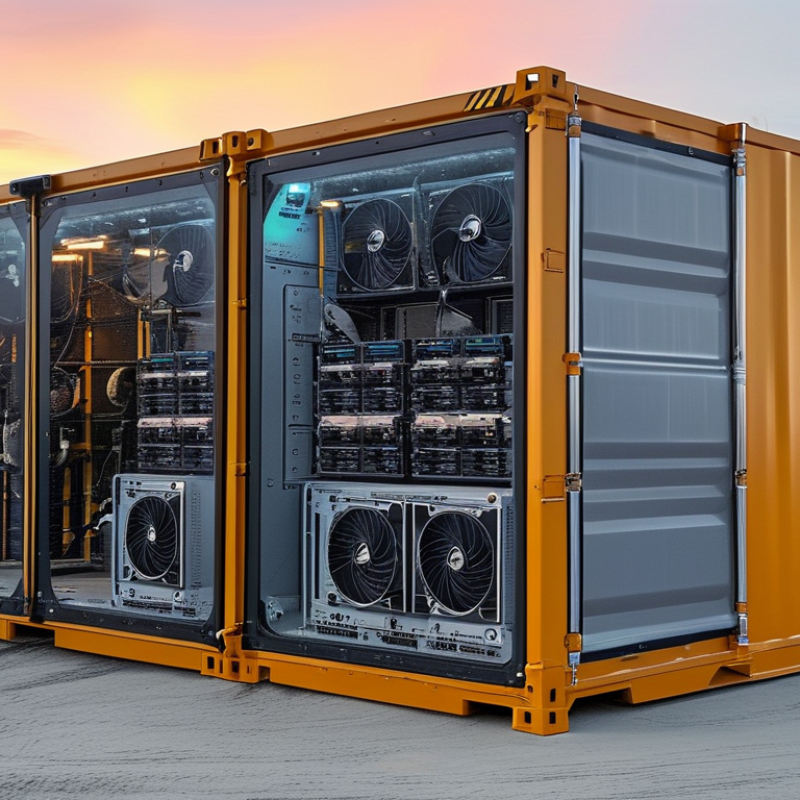
A mining container solution is a factory-built enclosure for high-density computing equipment. It combines racks, power distribution, cooling, networking, fire protection, and remote monitoring. Operators deliver the container to a prepared site, connect electricity and data lines, then load computing units into sealed bays. Air-cooled models guide hot exhaust through ducts, while liquid-cooled designs circulate fluid across heat-producing components. The system works like a compact data center, but deployment is usually faster and more flexible.
The International Energy Agency reported that data centers, artificial intelligence, and cryptocurrency operations used about 460 TWh of electricity in 2022. Demand could exceed 1,000 TWh by 2026. This makes efficiency important, not decorative. A well-designed container reduces cable lengths, improves airflow, and supports predictable maintenance. Yet the model is not flawless. A container cannot repair an unstable grid, poor grounding, or inadequate local cooling. I have seen projects focus on equipment density while underestimating transformer capacity. That mistake becomes expensive.
Tips: Check total power availability before ordering. Measure ambient temperature, dust, humidity, and noise limits. Request measured PUE data, cooling performance, and service procedures. Also verify spare-part access. The Uptime Institute’s Global Data Center Survey consistently identifies power failures as a major outage factor, so backup planning deserves more attention than visual design. Efficiency is never automatic.
7 Best Bitmain Container Solutions for Global Buyers?
Global buyers should compare mining containers by measurable operating features, not attractive specifications. Start with power density, input voltage, and thermal performance. A container handling 1 MW needs stable distribution, clear cable paths, and accessible breaker panels. The Uptime Institute’s 2023 Global Data Center Survey reported an average PUE of 1.58. A mining system above that level deserves closer inspection. Small cooling losses become expensive across a large fleet.
Cooling design requires practical testing. Air-cooled systems suit dry climates, while liquid-assisted designs may perform better in dusty or hot regions. Ask for measured outlet temperatures, fan redundancy, filter ratings, and performance at peak ambient conditions. A 40°C site changes the decision. Monitoring should track hash-rate stability, temperature, humidity, power quality, and automatic shutdown events. The International Energy Agency estimated that data centers, cryptocurrency, and artificial intelligence could consume up to 1,050 TWh annually by 2026. Efficiency is no longer a minor detail.
Transport and maintenance also separate strong systems from weak ones. Check ISO-compatible dimensions, lifting points, corrosion protection, fire detection, and local electrical compliance. Confirm whether technicians can replace fans or controllers without removing an entire rack. In my experience, service access is often underestimated. That is a costly mistake. Uptime targets can also look impressive until spare parts cross borders. A careful comparison should include documented test results, warranty response times, noise levels, and real operating data from similar climates. Paper performance is not field performance.
| Solution Type | Typical Capacity | Cooling Method | Typical Power Range | Recommended Climate | Key Advantages | Main Considerations |
|---|---|---|---|---|---|---|
| 1. Air-Cooled 20-Foot Mining Container | Approximately 180–220 standard ASIC miners, depending on miner dimensions and rack layout | Forced-air cooling with industrial exhaust and intake fans | About 1.5–2.5 MW, depending on miner efficiency and operating profile | Cool or temperate regions; suitable for controlled seasonal operation | Fast deployment, familiar maintenance procedures, relatively simple installation | Requires effective dust filtration, noise management, and sufficient ambient airflow |
| 2. High-Density Air-Cooled Container | Approximately 220–280 ASIC miners with optimized rack spacing | High-volume axial or centrifugal fans with hot-aisle airflow design | About 2.0–3.5 MW | Cool, dry locations with reliable ventilation infrastructure | Higher computing density and better use of container floor area | Higher fan power, heat output, sound pressure, and airflow-management requirements |
| 3. Immersion-Cooling Container | Approximately 100–180 miners, depending on tank volume and miner heat load | Single-phase or two-phase dielectric-fluid immersion cooling | About 1.0–2.5 MW per container module | Hot, dusty, or humid regions where air cooling is less effective | Lower dust exposure, reduced fan noise, improved thermal stability, and potential overclocking flexibility | Higher initial cost, dielectric-fluid management, tank maintenance, and specialized handling |
| 4. Hydro-Cooled Container System | Approximately 120–220 water-cooled or hydro-cooled miners | Closed-loop liquid cooling with pumps, heat exchangers, and external dry coolers | About 1.2–3.0 MW | Locations with access to dependable cooling infrastructure and treated water systems | Efficient heat transfer, stable chip temperatures, and lower dependence on room airflow | Water quality, leak prevention, pump redundancy, and freeze protection must be addressed |
| 5. Cold-Climate Air-Cooled Container | Approximately 180–260 ASIC miners, subject to local airflow and rack configuration | Filtered outside-air cooling with variable-speed fans and temperature control | About 1.5–3.0 MW | Cold and dry climates with long periods of low ambient temperature | Low cooling energy consumption and potentially strong operating efficiency | Condensation, snow ingress, low-temperature starts, and heater requirements need careful design |
| 6. Hot-Climate Dust-Resistant Container | Approximately 140–220 ASIC miners with derating based on ambient temperature | Enhanced filtration, positive-pressure airflow, and high-temperature fan systems | About 1.2–2.5 MW | Hot, dry, dusty, or desert environments | Improved protection against airborne particles and more consistent equipment operation | Filter replacement, thermal derating, corrosion protection, and auxiliary cooling may increase operating costs |
| 7. Modular Hybrid-Cooling Container | Approximately 150–240 miners, with separate air- and liquid-cooled zones | Combined forced-air and liquid-cooling architecture | About 1.5–3.0 MW | Variable climates and sites with mixed miner generations | Flexible deployment, phased upgrades, equipment compatibility, and improved resilience | More complex controls, plumbing, maintenance procedures, and commissioning requirements |
Note: Capacity and power figures are indicative planning ranges. Actual results depend on miner model, miner efficiency, rack spacing, electrical design, ambient conditions, cooling configuration, and applicable local regulations.
Seven Leading Containerized Mining Solutions for Different Operations
Containerized ASIC systems now serve varied operating conditions, not one universal blueprint. The Cambridge Bitcoin Electricity Consumption Index estimates annual network demand near 180 terawatt-hours in recent updates. That figure makes efficiency, heat control, and maintenance planning commercially important. For small sites, air-cooled 20-foot modules offer simple deployment and accessible fan replacement. High-density air systems suit moderate climates with filtered intake walls and oversized exhaust fans. They are familiar, but dust remains a stubborn weakness.
For hotter regions, single-phase immersion containers reduce acoustic output and stabilize chip temperatures. Two-phase immersion systems provide stronger thermal performance, although fluid management requires more specialized training. Forty-foot high-capacity modules fit industrial sites with reliable transformers and larger service corridors. Hybrid containers combine air cooling for older machines and liquid cooling for newer, higher-density units. Mobile modular systems support temporary power sites, but frequent relocation can increase cable damage and inspection costs. Keep layouts practical.
The International Energy Agency reported that data centres consumed about 415 terawatt-hours globally in 2024, showing why power infrastructure deserves equal attention. A seventh option is a waste-heat recovery container, designed to transfer thermal energy to greenhouses, workshops, or nearby buildings. Its value depends on local heat demand, not attractive brochures. In commissioning work, airflow readings often reveal problems before software alarms appear. I would still challenge every projected uptime figure. Filters clog, pumps age, and weather changes. Design for those inconvenient details.
Seven leading container solution configurations for different mining operations
The chart compares practical planning ranges for containerized mining deployments, measured by estimated usable IT load. Air-cooled formats are generally suited to dry climates and simpler maintenance, while immersion and liquid-cooled formats support higher density and improved heat management. Actual capacity depends on miner model, power distribution, climate, cooling design, and site limitations.
Choosing among seven containerized mining solutions requires more than comparing advertised capacity. Cooling performance should be tested under local weather conditions. A dry, 35°C site demands different airflow planning than a humid coastal location. Check fan redundancy, filter access, heat rejection, and temperature monitoring. Hot spots near rear exhausts can reduce equipment life.
Power design deserves equal attention. Ask for verified load figures, breaker coordination, grounding details, and protection against voltage fluctuations. A practical assessment should include transformer availability, cable distance, and local electrical approvals. Security should cover reinforced doors, camera coverage, access logs, fire detection, and emergency shutdown controls. Keep network equipment in a separated, locked compartment. Small gaps matter.
Scalability is not simply adding more containers. Confirm whether the site can expand its power, cooling, internet, and maintenance capacity. Modular layouts may shorten installation time, but they can create crowded service paths. Leave clear space for technicians and replacement parts. My first evaluation focused too heavily on machine density. That was a mistake. A dense layout looked efficient, yet maintenance became slower and riskier. Require documented test results, service response times, warranty terms, and spare-part availability. Regional support is especially important when customs delays or extreme weather interrupt operations. Reliable suppliers should explain limitations openly, not only present peak performance figures.
Choosing the right mining container depends on your market, power conditions, and operating budget.
Seven practical formats deserve attention: air-cooled, high-density, cold-climate, hot-climate, low-noise, rapid-deployment, and immersion-ready designs. Each solves a different problem. A cold region may reduce cooling costs, while a hot region needs stronger airflow and filtration. I have seen buyers focus on purchase price and underestimate transformer upgrades, cable length, ventilation space, and routine cleaning.
Your electrical supply should guide the decision. Check voltage stability, available capacity, grounding, and local inspection requirements before ordering. A compact container may suit a limited site, but larger units can lower infrastructure costs per machine. Noise also matters near homes or workplaces. Look for measured sound levels, washable filters, fire detection, and easy access to fans and control panels. These details affect uptime more than attractive exterior panels.
Tips: Compare the full operating cost, not only the container price. Request thermal test data for your climate. Confirm spare-part availability and service response times. Leave space for maintenance and safe cable routing. Ask for weatherproofing details, especially roof drainage and door seals. One overlooked issue is condensation after cold nights. I would also budget for early modifications, because the first layout is rarely perfect. A cheaper unit can become expensive if technicians must work in cramped, poorly lit spaces. Choose a design that your local team can inspect, repair, and operate confidently.