
What Is a Crypto Mining Rig and Where to Buy One?
A crypto mining rig is a purpose-built computer that uses specialized chips to help validate transactions and secure a cryptocurrency network. Think of a metal frame holding several machines, with fans pushing warm air through the room and power cables feeding each unit. The equipment may look simple. Choosing it is not.
Jaran Mellerud, a Bitcoin-mining analyst, has emphasized that electricity costs and hardware efficiency are central to mining economics. That is a useful starting point for anyone exploring Crypto Mining Rigs For Sale. A rig’s advertised hash rate tells only part of the story. Buyers should also compare power consumption, noise levels, cooling needs, warranty terms, and the machine’s condition. A unit that appears affordable can become costly when it runs around the clock.
Where should you buy? Options include manufacturer-direct stores, established hardware retailers, and reputable resale marketplaces. Check the seller’s business details, return policy, payment protections, and product documentation before ordering. Ask for clear photographs and a written record of the exact model and condition. Small details matter.
Profitability is never guaranteed. Network difficulty, coin prices, electricity rates, and shipping costs can change the calculation. I would be cautious about any listing promising fixed returns; that certainty deserves a second look. This guide explains how rigs work, which specifications matter, and how to assess sellers. The aim is practical: help readers ask better questions before spending money.
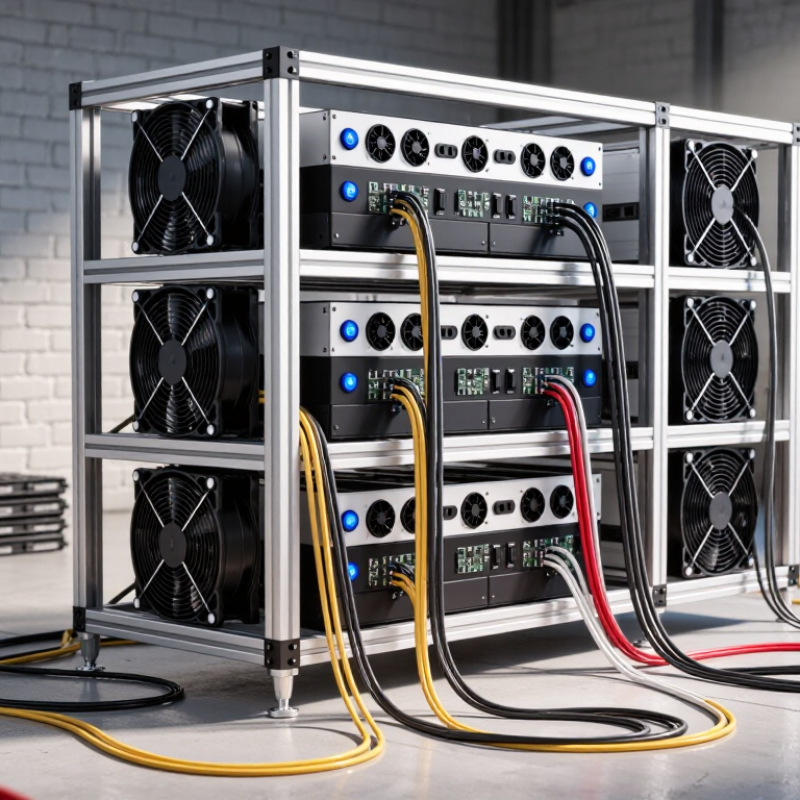
What a Crypto Mining Rig Is and How It Differs from Other Computers
A crypto mining rig is a computer designed to solve repeated cryptographic calculations and help validate transactions. Unlike an ordinary desktop, it prioritizes sustained computing power over everyday tasks like browsing or gaming. Many rigs use application-specific integrated circuits, or ASICs, built for one mining algorithm. They can be efficient at that task, but they are difficult to repurpose. GPU-based rigs are more flexible, though often less efficient for particular algorithms. Not magic—just specialized hardware.
The Cambridge Centre for Alternative Finance’s 2023 Digital Mining Industry Report estimated that sustainable energy sources accounted for 52.6% of Bitcoin mining’s energy mix in January 2022. That industry-wide estimate does not describe every rig or household. A rig’s real cost depends on its power draw, electricity rate, cooling needs, and network competition. A plug-in power meter can show actual consumption. A practical detail is easy to overlook: the machine releases heat and can make steady fan noise. I would not judge a rig by its advertised computing speed alone.
Tips: Check power use in watts, electrical requirements, and cooling before buying. Compare expected output with your local electricity cost. Leave room for uncertainty; mining returns can change.
What Is a Crypto Mining Rig and Where to Buy One? — What a Crypto Mining Rig Is and How It Differs from Other Computers
| Dimension | Crypto Mining Rig | General-Purpose Computer |
|---|---|---|
| Main purpose | Runs mining software to perform the calculations required by a compatible proof-of-work network. | Handles a broad range of tasks, such as office work, browsing, gaming, and content creation. |
| Typical hardware | May use multiple graphics processing units (GPUs), or specialized application-specific integrated circuits (ASICs) designed for a particular mining algorithm. | Usually combines a central processing unit (CPU), memory, storage, and one or more GPUs chosen for general computing needs. |
| Workload | Often operates continuously on a narrow, repetitive workload. An ASIC is generally limited to the algorithms it was designed to run. | Switches among different applications and workloads; its hardware is usually selected for flexibility rather than one mining task. |
| Performance measure | Commonly measured in hashes per second, with units such as MH/s, GH/s, or TH/s. The relevant measure depends on the algorithm and hardware. | Performance is assessed using task-specific measures, such as processing speed, graphics performance, or application benchmarks. |
| Power and cooling | Can draw substantial power and produce significant heat, particularly when several GPUs or high-power ASICs run continuously. Adequate ventilation and electrical capacity are important. | Power use and cooling needs vary by components and workload; typical desktop systems are not necessarily designed for uninterrupted mining operation. |
| Software and setup | Requires compatible mining software, network access, and usually a mining-pool or wallet configuration. A pool is optional but commonly used to combine participants' work. | Runs a general operating system and applications; mining software can be installed if the hardware and chosen network support it. |
| Where to buy | Common sources include specialist mining-equipment retailers, general computer-hardware sellers, and reputable second-hand marketplaces. Check the exact model, condition, power requirements, return terms, and seller reputation. | Common sources include computer retailers, electronics stores, system integrators, and second-hand marketplaces. |
| Before purchasing | Confirm that the device supports the intended algorithm and network. Estimate electricity costs, check local electrical and noise requirements, and remember that mining revenue is variable and not guaranteed. | Choose components based on intended applications, compatibility, warranty, power needs, and upgrade plans. |
Mining performance, power consumption, and profitability vary with hardware, software, network conditions, electricity prices, and the cryptocurrency being mined.
Related Posts
-

Top 10 Best Mining Rig Options for 2026
-
Top Portable Mining Rig Advantages and Features What You Need to Know
-

Best Bitcoin Miner Store Reviews and Buying Guide?
-
2026 Top Bitcoin Mining Equipment to Buy for Profit?
-

Top 10 Bitcoin Miner Store Options for Global Buyers?
-
Best Cryptocurrency Miners For Sale in China Today?