How to Find the Best Crypto Mining Equipment for Sale

Contact Us

How to Find the Best Crypto Mining Equipment for Sale

Finding the right Crypto Mining Equipment For Sale requires more than comparing advertised hash rates. A machine may look powerful on a seller’s page, yet consume expensive electricity every hour. Its fans may also sound like a workshop beside your desk. The real decision begins with numbers, operating conditions, and seller reliability.

Ethan Vera, COO of Luxor Technology, has offered a practical warning: “Mining economics are always changing.” That short statement matters. Bitcoin prices move, network difficulty changes, and electricity contracts can reshape profitability overnight. Experienced buyers therefore examine hash rate, joules per terahash, power draw, cooling needs, warranty coverage, and delivery terms. They also calculate total ownership costs, including repairs, hosting, ventilation, and possible downtime.

Small details often decide whether equipment performs well. Check the power supply carefully. Confirm the voltage. Ask for recent test results, serial-number verification, and clear return conditions. A trustworthy seller should explain refurbished components instead of hiding them behind polished photographs. Independent reviews and transparent company information add useful confidence, but neither guarantees profit.

There is no perfect purchase.

A spreadsheet can expose weak assumptions, but it cannot predict every market shift. That is where this guide remains deliberately cautious. It will compare equipment types, assess realistic operating expenses, and identify warning signs before money changes hands. The goal is not to promise effortless returns. It is to help readers choose responsibly, protect their budget, and understand what their chosen machine must endure every day.
How to Find the Best Crypto Mining Equipment for Sale

Define Your Crypto Mining Goals and Operating Requirements

Before comparing crypto mining equipment for sale, define what success means for your operation. Are you seeking steady supplemental income, learning experience, or a larger production setup? Your answer affects equipment capacity, budget, electricity use, and expected operating hours.

Measure your electricity rate in actual currency per kilowatt-hour. Then estimate monthly consumption using the equipment’s rated power and your planned runtime. Add ventilation, internet service, maintenance, and replacement parts. Heat matters too. A small room can become uncomfortable within minutes. Noise may also disturb household members or nearby workers. Check local rules, property restrictions, tax requirements, and electrical safety standards before purchasing.

I once underestimated cooling costs because I focused on advertised performance figures. That mistake was expensive. Now I compare efficiency, warranty terms, repair access, and independent test results. I also inspect circuit capacity and record room temperature during testing. Do not trust a single profitability calculator. Network conditions, digital asset prices, operating difficulty, and power rates can change quickly. Leave an emergency budget for downtime and unexpected repairs. A less powerful unit may fit your goals better if it runs safely, quietly, and consistently. Track real energy use for several weeks, then review the results honestly. My first estimate was too optimistic.

Compare Mining Hardware Types, Hash Rates, and Energy Efficiency

Choosing crypto mining equipment starts with matching hardware to the mining algorithm, not chasing the highest advertised hash rate.

Application-specific integrated circuits deliver strong performance for one algorithm, while graphics processing units support broader algorithm choices.

Central processing units usually offer lower hash rates and are less suitable for large-scale mining.

Hash rate matters, but efficiency matters more.

A machine producing 100 TH/s at 20 J/TH can be more practical than one producing 120 TH/s at 35 J/TH.

The Cambridge Centre for Alternative Finance reported that sustainable energy represented about 52.6% of Bitcoin mining’s electricity mix in 2023. Its 2024 mining research also highlights electricity pricing as a major profitability factor.

Compare each device’s joules per terahash, expected uptime, cooling requirements, and local electricity cost.

The International Energy Agency’s Electricity 2024 report notes that data-centre electricity demand is rising rapidly, making energy planning increasingly important.

Keep the room cool. Heat becomes a hidden expense.

I learned that advertised laboratory efficiency can differ from real operation. Dust, temperature, unstable power, and firmware settings may reduce performance.

Use independent data from the Cambridge report, manufacturer specifications, and transparent mining calculators before purchasing.

A spreadsheet should include purchase cost, shipping, power draw, maintenance, and estimated difficulty changes.

Profit projections are imperfect. Recheck them weekly.

Evaluate Equipment Costs, Profitability, and Return on Investment

Finding suitable crypto mining equipment starts with the numbers, not impressive hashrate claims. I compare purchase price, shipping, setup, and expected lifespan. A machine drawing 3,000 watts can quietly reshape the budget. At $0.10 per kWh, it uses about $7.20 of electricity daily. Actual rates vary. Cooling, internet, repairs, and ventilation add costs that advertisements often minimize. Check local rules, taxes, and residential power limits before ordering.

Profitability needs conservative estimates. I record the equipment’s hashrate, efficiency, network difficulty, coin price, pool fees, and downtime. Then I test optimistic, average, and weak market scenarios. The break-even period is simple: total investment divided by realistic monthly net profit. Yet this figure can mislead when difficulty rises or hardware loses value. Return on investment should include resale value and replacement parts, not only daily income. Keep a spreadsheet and update it weekly. Numbers change fast.

Tips: Measure electricity at the wall with a reliable meter. Leave room for heat and noise. Never trust a calculator without checking its assumptions. Start with one unit if your figures are uncertain. I once underestimated cooling costs; that mistake reduced my expected return sharply. That experience made me value stable operating conditions over maximum output. A slightly slower machine may provide better long-term returns when it uses less power and needs fewer repairs.

Verify Seller Reputation, Product Quality, and Warranty Coverage

Finding suitable crypto mining equipment for sale begins with checking the seller, not the advertised hash rate. I look for a verifiable business address, clear contact details, and reviews from independent platforms. Reviews should describe delivery, testing, and after-sales support. Be cautious when every comment sounds perfect.

I once trusted a listing that showed impressive performance numbers but provided no recent test report. That mistake taught me to request dated photos, serial numbers, power measurements, and a short operating video. Compare the stated hash rate with energy consumption, fan noise, and temperature readings. Ask whether the unit is new, refurbished, or previously repaired. Small details matter. A professional seller should answer technical questions without pressure or vague promises.

Warranty coverage deserves careful attention before payment. Request written terms showing the coverage period, starting date, repair process, and shipping responsibilities. Check whether the warranty covers the control board, power supply, cooling system, and labor. Some policies exclude damage from unstable electricity or improper installation, which can create unexpected costs. Confirm the return window and keep invoices, messages, and test records. I prefer secure payment methods with buyer protection, although fees can be frustrating. If a seller refuses basic documentation, I treat that refusal as meaningful evidence. The cheapest machine may become expensive after one failed component.

How to Find the Best Crypto Mining Equipment for Sale - Verify Seller Reputation, Product Quality, and Warranty Coverage

Evaluation Dimension What to Verify Reliable Evidence or Data Recommended Acceptance Standard Warning Signs
Seller identity Confirm the seller’s legal identity, physical address, contact details, and operating history. Business registration records, verifiable address, consistent contact information, and transaction documentation. Seller information should be independently verifiable and consistent across records. Only encrypted messaging, no legal details, or pressure to pay immediately.
Reputation history Assess whether previous customers received the stated equipment in the advertised condition. Reviews on independent platforms, dated customer feedback, dispute records, and references from verifiable buyers. Look for a consistent record over time rather than relying on a few recent reviews. Large numbers of identical reviews, recently created profiles, or repeated unresolved complaints.
Payment protection Check whether the payment method provides buyer protection or a dispute process. Written invoice, escrow terms, traceable payment records, and clearly stated refund conditions. Use a payment method with documented dispute rights; avoid irreversible transfers for unknown sellers. Requests for cryptocurrency-only payment, personal accounts, or split payments without an invoice.
Equipment type Determine whether the equipment is an application-specific miner, graphics-processing unit system, or another specialized device. Algorithm compatibility, supported software, operating system requirements, and available mining-pool support. The equipment must support the intended algorithm and be compatible with the planned mining software. Unclear specifications, unsupported algorithms, or performance claims without testing conditions.
Hash rate Compare the advertised computing output with independently measured performance. Live dashboard screenshots, dated test results, accepted-share records, and stated operating settings. Measured output should be close to the published specification under comparable conditions. Only theoretical maximums, missing test duration, or unusually high results with no supporting data.
Energy efficiency Measure how much electricity is required for each unit of computing performance. For SHA-256 equipment, compare joules per terahash (J/TH). For GPU systems, compare watts per unit of algorithm-specific performance. Lower energy use per unit of output is generally preferable, provided stability and cooling requirements remain acceptable. Power consumption is omitted, measured at the wrong voltage, or quoted only for the control board.
Physical condition Inspect casing, fans, heat sinks, circuit boards, connectors, and evidence of environmental damage. Recent photographs, a continuous operating video, maintenance records, and serial-number images. Condition should match the listing, and all critical components should be present and functional. Corrosion, excessive dust, damaged seals, missing fans, burnt connectors, or altered serial labels.
Operating stability Check whether the equipment maintains stable performance without frequent errors or restarts. A test lasting several hours, error logs, temperature readings, accepted-share data, and restart history. The device should operate continuously during testing with no unresolved hardware errors. Frequent disconnections, unstable hash rate, overheating, or unexplained automatic restarts.
Power requirements Confirm voltage, current, connector type, circuit capacity, and total electrical load. Technical specification sheet, power-meter reading, power-supply details, and electrical installation requirements. The planned electrical circuit should safely support continuous operation with appropriate headroom. Incorrect voltage, unsuitable connectors, missing power supplies, or undisclosed power draw.
Cooling and noise Evaluate heat output, airflow, ambient temperature, and sound level. Temperature logs, fan specifications, ventilation requirements, and measured sound data when available. The installation location must support continuous heat removal and acceptable noise conditions. No ventilation guidance, abnormal fan noise, thermal throttling, or operation above recommended limits.
Warranty coverage Identify the warranty period, covered components, exclusions, and claim procedure. Written warranty certificate, purchase invoice, serial-number requirements, and repair or replacement terms. Common equipment warranties may range from several months to one year, but the exact period must be confirmed in writing. Verbal promises, warranty void after resale, no stated exclusions, or unclear responsibility for shipping costs.
Return and replacement policy Determine what happens if the equipment arrives damaged, incomplete, or materially different from the listing. Written return window, inspection procedure, refund terms, and responsibility for return transportation. The policy should cover dead-on-arrival units and significant specification differences. “All sales final,” no inspection period, or refunds offered only as store credit without clear terms.
Shipping and customs Calculate delivery time, insurance, import duties, taxes, and damage-claim procedures. Tracking number, commercial invoice, declared value, shipping insurance, and customs documentation. The total delivered cost should be known before payment and include foreseeable import charges. Unusually low shipping costs, vague customs responsibility, or no insurance for high-value equipment.
Total operating cost Estimate electricity, cooling, hosting, maintenance, pool fees, and downtime. Local electricity tariff, measured power draw, hosting quotation, maintenance history, and pool fee schedule. Compare equipment using total cost of ownership rather than purchase price alone. Profit estimates exclude electricity, taxes, downtime, cooling, or network-difficulty changes.

Note: Performance, profitability, delivery costs, and warranty terms vary by equipment condition, operating environment, electricity rate, jurisdiction, and seller policy. Confirm all figures in writing before purchase.

Plan Installation, Cooling, Electricity, and Ongoing Maintenance

How to Find the Best Crypto Mining Equipment for Sale

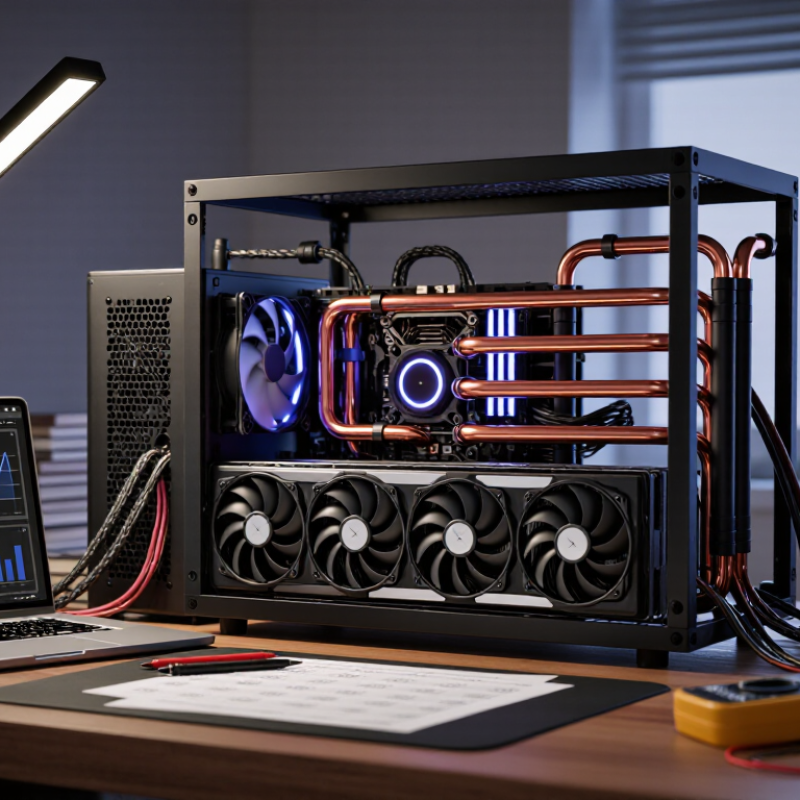
Buying mining equipment is only part of the decision. Plan the installation before comparing performance figures. Measure the room, door width, floor strength, and cable distance. A powerful machine can create intense heat and continuous noise. Place equipment on a stable, nonflammable surface with clear space around every air intake. I once underestimated heat output in a small room. That mistake caused frequent shutdowns.

Electricity planning requires careful calculations. Check the machine’s rated power, expected daily usage, and local electrical capacity. Use properly rated circuits, secure connections, and professional inspection where required. Avoid overloaded extension cables.

Cooling should match the climate and room size. Exhaust fans may work in mild conditions, but hotter environments need controlled airflow or dedicated cooling. Keep dust filters accessible. Humidity also matters. Condensation can damage internal components.

Tips: Record temperature, power draw, fan speed, and error messages each day. Clean filters on a fixed schedule. Inspect cables for heat marks. Leave enough space for repairs. Choose equipment with realistic efficiency, not only impressive peak output. Maintenance costs are easy to ignore. They should not be. My own early plan lacked spare parts and backup ventilation, which created unnecessary delays. A simple checklist would have prevented much of that trouble.