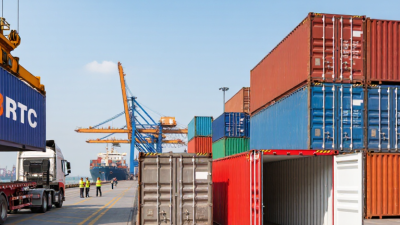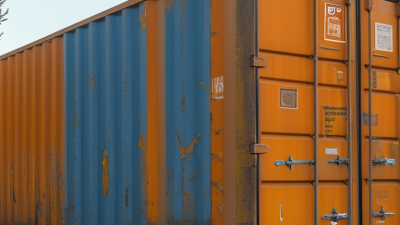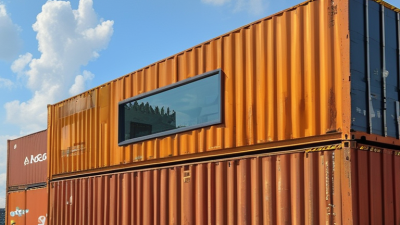
China’s container manufacturing sector has become a vital link in global trade. UNCTAD’s Review of Maritime Transport reports that more than 80% of global merchandise trade moves by sea. This scale creates constant demand for durable, standardized, and traceable equipment. China remains a major production base, supported by mature steel supply chains, advanced welding systems, and extensive port connections.
The China Top 10 Antbox Container Manufacturers for Global Buyers guide examines suppliers through practical criteria. These include manufacturing capacity, material quality, certification, customization, delivery performance, and after-sales support. The World Bank’s Logistics Performance Index 2023 also shows why reliability matters. Border processes, shipment tracking, infrastructure, and delivery punctuality can directly influence procurement results. A lower factory price may lose its value after delays, coating failures, or difficult spare-parts access.
John Fossey, a container equipment specialist at Drewry, has emphasized, “A container is only valuable when it performs reliably through repeated handling.” That principle fits Antbox Container evaluation closely. Buyers should inspect corner castings, floor construction, door seals, weld consistency, and corrosion protection. Small details matter at a busy terminal.
Still, no ranking can fit every project. A refrigerated unit, modular office, storage box, and offshore container require different specifications. Factory claims also need independent verification. This guide therefore offers a practical starting point, not a final verdict. Global buyers should request test records, production photos, references, and clear warranty terms before signing. Truthfully, supplier comparison is never perfectly neat. That is precisely why careful due diligence remains essential.
China Top 10 Antbox Container Manufacturers for Global Buyers
What Antbox Containers Are and Why Global Buyers Choose China
Antbox containers are prefabricated modular units built from steel frames, insulated panels, flooring, doors, and service connections. They can become site offices, classrooms, worker accommodation, retail rooms, or emergency facilities. Factory production reduces on-site labor and shortens installation time. A finished unit may arrive with wiring, lighting, and plumbing prepared for connection. Still, quality depends on design details, not appearance alone.
Global buyers often choose China because its manufacturing network supports steel processing, panel production, electrical assembly, and international shipping. This integrated supply chain can improve pricing and offer practical customization. Buyers may request different insulation thicknesses, window layouts, roof designs, or internal finishes. Experienced factories also understand export packing, container loading, documentation, and project-based production. However, cheaper quotations sometimes exclude foundations, transport, testing, or local installation. That oversight can damage an otherwise sensible project.
Tips: Request material specifications, structural drawings, fire-performance documents, and inspection records before payment. Confirm wind, snow, seismic, and temperature requirements for the destination. Ask for a sample room or detailed photographs of concealed joints. Independent inspection is useful. I would also compare the delivered cost, because the lowest factory price is not always the lowest project cost. Feedback from previous buyers should be checked carefully, since online reviews can be incomplete.
Antbox-style modular units are commonly based on standardized container dimensions, making them suitable for transport, rapid assembly, temporary accommodation, offices, retail spaces, and other prefabricated applications. The chart compares the typical internal volume of widely used ISO container formats. Larger high-cube units provide more usable vertical space, which is one reason global buyers consider Chinese modular-container suppliers for flexible, scalable, and export-oriented projects.
Data shown are approximate typical internal volumes based on commonly specified ISO dry-container dimensions; actual dimensions vary by design, manufacturer, and applicable certification requirements.
Evaluating a container manufacturer starts with evidence, not polished renderings. Ask for factory records, welding procedures, material certificates, and recent project references. ISO 668 and ISO 1161 define key container dimensions and corner fittings. A compliant-looking frame still needs verification. Request dimensional reports, load-test results, corrosion protection details, and photographs before wall panels hide the structure. A useful audit follows one unit from steel cutting to final packing.
UNCTAD’s Review of Maritime Transport 2024 reported 2023 seaborne trade at about 12.3 billion tonnes. That scale makes packing, documentation, and delivery control commercially important. Compare quoted payload with tare weight, internal dimensions, stacking limits, and moisture protection. The World Bank’s 2023 Logistics Performance Index separates customs, infrastructure, tracking, and timeliness. Ask for container-loading plans and carton-level packing lists. Small omissions become expensive at the port.
For habitable units, inspect insulation thickness, thermal bridges, ventilation, fire performance, electrical protection, and drainage. The 2024 UNEP Global Status Report says buildings consume 32% of global energy and produce 34% of global carbon emissions. Energy performance is not cosmetic. Require tested U-values, not vague claims such as “well insulated.” I would also verify warranty exclusions, spare-part availability, and independent inspection rights. No supplier is perfect; low prices can conceal weak documentation or future maintenance costs. That is the uncomfortable question.
China’s Top 10 Antbox Container Manufacturers for International Buyers should be assessed through verifiable production evidence, not online rankings alone. Industry reports consistently identify China as the leading source of global shipping containers, with estimates exceeding 95% of annual dry-container production. UNCTAD also reports that maritime transport carries over 80% of world merchandise trade by volume. This scale gives Chinese manufacturers strong access to steel, fittings, insulation, and export logistics.
For international buyers, the strongest manufacturers usually provide ISO 9001 quality systems, ISO 668 dimensional compliance, and CSC-related documentation where shipping use applies. Buyers should inspect weld continuity, corner-casting alignment, floor loading, coating thickness, and door compression seals. A practical factory visit may reveal more than a polished catalogue. Check sample units in rain, heat, and repeated loading conditions. Minor coating damage can become serious corrosion near coastal ports.
The top ten shortlist should also consider production capacity, factory audit results, customization control, spare-part support, and delivery records. Drewry’s Container Census highlights the importance of fleet availability and equipment reliability across global trade routes. However, capacity alone does not prove quality. Some factories move quickly but document poorly. That weakness deserves attention. International purchasers should request independent inspection reports, material certificates, packing photographs, and clear warranty terms before payment. A ranking can guide research, but it cannot replace physical verification and contract-level testing.
| Reference No. | Container Configuration | Common ISO Size | Approx. External Dimensions (L × W × H) |
Approx. Internal Volume | Typical Maximum Payload | Primary International Use | Key Buyer Verification Point |
|---|---|---|---|---|---|---|---|
| 01 | Standard Dry Cargo Container | 20 ft ISO | 6.06 × 2.44 × 2.59 m | Approximately 33 m³ | About 28,000 kg, subject to CSC and road limits | General cargo, machinery, household goods | ISO 668 dimensions, CSC safety approval, floor load rating |
| 02 | Standard Dry Cargo Container | 40 ft ISO | 12.19 × 2.44 × 2.59 m | Approximately 67 m³ | About 26,500–28,800 kg, depending on tare weight | High-volume general freight | Door and corner-post dimensions, gross weight, weld quality |
| 03 | High-Cube Dry Cargo Container | 40 ft High Cube | 12.19 × 2.44 × 2.90 m | Approximately 76 m³ | About 26,500–28,800 kg | Lightweight, bulky and tall cargo | 2.90 m overall height, internal clearance, CSC plate |
| 04 | Open-Top Container | 20 ft or 40 ft | Based on the selected ISO length | Approximately 32–66 m³ | Usually comparable to the corresponding dry container | Oversized machinery, timber, scrap and aggregates | Removable roof, lashing rings, tarpaulin arrangement |
| 05 | Open-Side Container | 20 ft or 40 ft | Based on the selected ISO length | Approximately 33–67 m³ | Generally similar to an equivalent dry container | Long, wide or difficult-to-load cargo | Side-door sealing, locking bars, door reinforcement and drainage |
| 06 | Refrigerated Container | 40 ft High Cube Reefer | 12.19 × 2.44 × 2.90 m | Approximately 67 m³ | Often about 29,000 kg, depending on equipment and regulations | Food, pharmaceuticals and temperature-sensitive goods | Temperature range, power requirement, airflow and PTI report |
| 07 | Flat-Rack Container | 20 ft or 40 ft | ISO length × 2.44 m width | Not enclosed; cargo envelope varies | Commonly 21,000–40,000 kg, depending on type | Heavy machinery, steel products and project cargo | Lashing capacity, end-wall strength, payload plate and twist-lock fit |
| 08 | ISO Tank Container | 20 ft Tank | Approximately 6.06 × 2.44 × 2.59 m | Usually 14,000–26,000 litres | Cargo-specific; governed by tank rating and transport rules | Liquids, gases and powders | Applicable dangerous-goods approval, pressure rating and valve protection |
| 09 | Insulated Container | 20 ft or 40 ft | Based on the selected ISO length | Lower than an equivalent dry container | Depends on insulation system and tare weight | Passive temperature protection and specialized storage | Insulation thickness, thermal performance, vapor barrier and condensation control |
| 10 | Modular Accommodation Container | Commonly 20 ft or 40 ft | Usually based on ISO-compatible footprints | Approximately 28–67 m³ before internal fit-out | Structural and transport limits vary by configuration | Offices, accommodation, classrooms and site facilities | Local building codes, fire rating, electrical compliance and lifting points |
When comparing China’s leading antbox container manufacturers, buyers should test quality, pricing, compliance, and service separately. ISO 668 defines key container dimensions and corner fittings, but it does not prove factory workmanship. Ask for welding records, steel certificates, coating thickness, and loading-test photos. A sample unit should show even seams, sealed joints, and a clean floor finish. Small defects often become expensive repairs.
Pricing needs a full-cost view. Include tooling, packaging, inland transport, installation, spare parts, and warranty terms. UNCTAD’s Review of Maritime Transport 2024 reported 2.4% growth in seaborne trade during 2023, increasing pressure on capacity and delivery planning. A cheap quotation may hide weaker insulation or slower replacement support. That is where judgement can fail. Verify payment stages and production milestones through independent inspections. For compliance, request fire-rating documents, electrical test reports, structural calculations, and country-specific approvals. Requirements differ by destination.
Tips: Compare three written quotations using the same specifications. Check whether the quoted steel grade, insulation thickness, and window hardware are identical. Confirm the manufacturer’s response time in writing. A 24-hour reply sounds useful, but actual spare-part delivery matters more. Review at least two completed projects, preferably in a similar climate. Also, leave room for honest doubt; factory photos rarely reveal long-term corrosion, condensation, or service delays.
Choosing the right Chinese container manufacturer requires more than comparing online prices. A reliable supplier should provide factory registration, production photos, material specifications, and recent project references. Ask whether the workshop controls welding quality, insulation thickness, door alignment, and corrosion protection. Small details often decide whether a container performs well after installation.
Request a sample quotation with clear dimensions, steel grades, surface treatment, electrical options, packaging, and delivery terms. Confirm which standards apply in your destination market. Independent inspections can check frame measurements, welds, coating thickness, and water resistance before shipment. A video call is useful, but an on-site audit gives stronger evidence. Showroom displays can look perfect. Production records matter more.
Evaluate communication as carefully as manufacturing capacity. The supplier should answer technical questions directly and explain limitations without vague promises. Check lead times against actual factory schedules, not only sales estimates. Payment protection and written warranty terms also deserve attention. I would avoid selecting the lowest offer too quickly; hidden changes in materials may appear later. My own checklist would still need improvement, especially for regional installation rules and after-sales response times. Reliable cooperation grows from documented details, realistic claims, and consistent quality checks.