China Top ASIC Crypto Miner Manufacturers?
China remains a major name in specialized mining hardware, despite significant changes in its domestic cryptocurrency policy environment. This article examines China’s leading ASIC Crypto Miner manufacturers, focusing on engineering capability, energy efficiency, production scale, and market credibility. The comparison emphasizes verifiable evidence, not promotional rankings.
Bitmain, MicroBT, and Canaan are widely recognized brands in the global application-specific integrated circuit market. Their machines are commonly evaluated through hash rate, joules per terahash, firmware stability, warranty support, and supply-chain reliability. The Cambridge Centre for Alternative Finance has repeatedly shown that electricity efficiency and regional energy conditions strongly influence mining economics. The International Energy Agency also reported that cryptocurrency mining contributes meaningfully to global electricity demand, with consumption concentrated in several major markets. Efficiency is no longer a minor specification.
Numbers move quickly. Product labels can age within months.
Independent data from Hashrate Index and other mining research platforms suggests that machine profitability depends on more than advertised terahash performance. Electricity prices, pool fees, cooling systems, network difficulty, and Bitcoin market conditions can change results sharply. Manufacturer claims therefore require practical testing and transparent methodology. Some published comparisons remain incomplete, especially when noise levels, repair rates, and long-term degradation receive little attention. That limitation deserves scrutiny. This guide considers both the strengths and weaknesses of China-based manufacturers, while encouraging buyers to verify certifications, import requirements, service terms, and total operating costs before making a decision.
What ASIC Crypto Miners Are and How They Work
China Top ASIC Crypto Miner Manufacturers?
What ASIC Crypto Miners Are and How They Work
An ASIC miner is a computer built for one narrow task: solving cryptographic calculations. ASIC means application-specific integrated circuit. Unlike a general computer, it does not handle many unrelated applications. Its chips repeatedly calculate hashes for a specific proof-of-work algorithm.
During mining, the machine receives a block header and changes a small value called a nonce. It hashes the data again and checks whether the result meets the network’s target. This process is highly repetitive. Speed is measured in hashes per second, while efficiency is often measured in joules per terahash. Lower energy use usually matters more than impressive headline speed.
In a working facility, power cables, ventilation, and temperature monitoring are as important as the miner itself. The chips produce constant heat, often requiring strong airflow and careful noise control. Operators may connect machines to a mining pool, where computing work is shared and rewards are distributed according to contributed effort. Local regulations, electricity rules, and tax obligations must be checked before operation.
Real performance can differ from laboratory figures. Dust, unstable voltage, outdated firmware, and hot rooms reduce efficiency. My explanation is not perfect either; network difficulty and market conditions change quickly. A reliable evaluation should examine measured energy use, cooling requirements, warranty terms, repair access, and long-term operating records instead of trusting one specification sheet.
Key Factors for Comparing Chinese ASIC Miner Manufacturers
Choosing a Chinese ASIC crypto miner manufacturer requires more than comparing advertised hash rate. In practical evaluations, electrical efficiency is the first checkpoint. Compare joules per terahash under the same temperature, voltage, and workload. Laboratory figures can differ from field performance. Ask for independent test reports, operating logs, and firmware revision details. Noise matters too. A miner running beside other units can exceed comfortable workplace levels. Check cooling design, fan quality, dust tolerance, and thermal throttling behavior. Small details often decide uptime. Request a sample unit or documented trial before placing a large order. This is not always convenient. It is still wiser.
Reliability also depends on technical support and production discipline. Examine warranty terms, repair procedures, spare-part availability, and response times. A low price means little if a failed control board waits weeks for replacement. Verify factory quality controls, serial-number tracking, and pre-shipment inspection records. Clear documentation signals professional engineering. Vague answers deserve caution. Security needs equal attention. Confirm signed firmware, update procedures, access controls, and protection against unauthorized configuration changes. Review business registration, export paperwork, payment terms, and applicable energy or import requirements in your market. Compliance protects the purchase and its operators. Claims should be independently checked. No comparison is perfect. Some manufacturers publish impressive data but provide limited long-term evidence. Treat that gap honestly, record assumptions, and compare total operating cost rather than headline performance alone.
Leading China-Based ASIC Crypto Miner Manufacturers
China Top ASIC Crypto Miner Manufacturers?
China remains a major manufacturing base for application-specific integrated circuit (ASIC) crypto miners. Its industrial clusters support chip integration, aluminum machining, power supplies, and high-volume testing. Cambridge Centre for Alternative Finance estimated Bitcoin mining consumed about 121 terawatt-hours of electricity in 2023. That figure makes energy efficiency more than a marketing detail.
Leading China-based manufacturers compete through efficiency, cooling design, and production consistency. Hashrate Index market data from 2024 placed competitive new-generation equipment near 15–20 joules per terahash. Lower figures can reduce electricity costs, but laboratory results may differ from mining-farm performance. Heat, dust, unstable voltage, and restricted airflow matter. A practical buyer should request measured hash rate, failure-rate records, acoustic data, and warranty terms.
Look closely at testing.
Some factories provide burn-in testing before shipment. Others offer remote diagnostics and replacement parts through regional service centers. These details can reduce downtime when a fan fails beside a hot aisle. Cambridge’s mining research also highlights the growing role of renewable and curtailed electricity, so manufacturers increasingly design equipment for flexible deployment. Still, efficiency claims deserve independent verification. I would not rely on a catalogue sheet alone. China’s supply chain is powerful, but delivery schedules, customs documentation, and after-sales support can remain uneven. That weakness is easy to underestimate.
How to Evaluate Miner Performance, Cost, and Reliability
China Top ASIC Crypto Miner Manufacturers?
Evaluating an ASIC miner requires more than reading its advertised hash rate. Compare terahashes per second with power efficiency, measured in joules per terahash. A model producing 100 TH/s may look strong, yet consume more electricity than a slightly slower, efficient unit. My own early comparisons focused too heavily on speed. That was a mistake.
Calculate daily power cost using your local electricity tariff. Include shipping, installation, cooling, maintenance, and possible import charges. Ask manufacturers for independent test data, operating temperature ranges, noise levels, and warranty terms. Request serial-number tracking and clear repair procedures. A reliable supplier should answer technical questions directly, not hide behind impressive specifications. Small details matter.
Tips: Run a 24-hour acceptance test before large deployment. Record hash rate, temperature, fan behavior, and rejected shares. Check whether performance remains stable after the machine warms up. Inspect power cables and circuit capacity carefully. Never assume laboratory figures match a crowded mining room.
Reliability also depends on support after delivery. Confirm spare-part availability, response times, firmware controls, and service-center locations. Read recent customer feedback, but treat every review cautiously. Some reports may be incomplete or promotional. Ask for references from operators with similar climate and electrical conditions. A fair comparison should include downtime risk, not only purchase price. Cheap hardware can become expensive when repairs interrupt operation. That point deserves more attention.
Purchasing, Compliance, Warranty, and After-Sales Considerations
China Top ASIC Crypto Miner Manufacturers?
Purchasing, Compliance, Warranty, and After-Sales Considerations
Choosing an ASIC manufacturer requires more than comparing hash rate and advertised price. Request a formal quotation, factory address, production capacity, and recent test records. Ask whether the unit is new, refurbished, or assembled from mixed components. A clear serial-number list matters. So does a detailed commercial invoice. I have seen low-cost offers become expensive after unclear shipping terms and missing accessories.
Compliance should be checked before payment. Confirm the machine meets electrical, safety, and radio requirements in the destination market. Verify voltage, plug type, power consumption, and cooling needs. Your customs broker should review product classification and import documents. Do not rely on a sales representative’s verbal assurance. Written records protect both sides. Requirements can change.
Warranty language deserves careful reading. Check coverage periods, excluded damage, repair locations, shipping responsibility, and response times. Ask how diagnostics are performed and whether replacement parts are available locally. A useful supplier should provide firmware guidance, maintenance instructions, and a named service contact. Keep photos of the package before opening it. Keep every test report. Some buyers overlook downtime costs, which may exceed the repair fee. I would also request a small trial order, although this adds time and freight expense. That caution can feel excessive, but one rushed purchase can expose weak support.
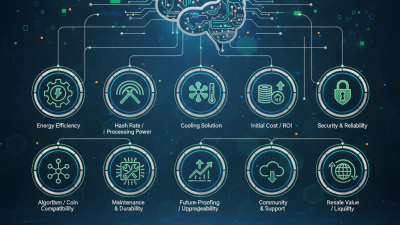
China Top ASIC Crypto Miner Manufacturers: Evaluation Priorities
The chart presents a practical procurement framework for evaluating ASIC crypto-miner suppliers. Compliance covers export documentation, customs requirements, and applicable cryptocurrency-mining restrictions; warranty covers written coverage, repair terms, and replacement conditions; after-sales covers technical support, spare parts, troubleshooting, and response processes.