2026 Top Cheap Bitcoin Mining Hardware for Global Buyers

Contact Us

2026 Top Cheap Bitcoin Mining Hardware for Global Buyers

Choosing cheap Bitcoin mining hardware in 2026 requires more than comparing online prices. Global buyers must examine efficiency, warranty coverage, electricity costs, shipping, taxes, and local operating rules. A low-cost ASIC may look attractive beside a glowing price tag, yet consume more power and produce less profit than a newer model.

Jaran Mellerud, a respected Bitcoin mining analyst, has said, “Bitcoin mining is an energy business, not a computer business.” This observation guides the discussion in this article. Cheap Bitcoin Mining depends heavily on electricity rates, cooling conditions, uptime, and network difficulty. Hardware is only one part of the calculation.

The guide reviews affordable ASIC miners, refurbished units, entry-level machines, and practical buying considerations for international customers. It also considers noise, heat, power connectors, customs procedures, and seller reliability. A machine rated at 100 terahashes per second may perform differently in a dusty warehouse than in a professionally cooled facility.

Numbers can disappoint.

Profit estimates change quickly. Bitcoin prices move, mining difficulty rises, and electricity contracts vary between regions. Therefore, every buyer should verify specifications, calculate daily energy consumption, and confirm local compliance before ordering. We will not treat the cheapest listing as the best choice. Sometimes, paying more for efficiency, support, and a tested power supply prevents expensive mistakes. Still, this comparison has limits, because market conditions can change before a shipment arrives.
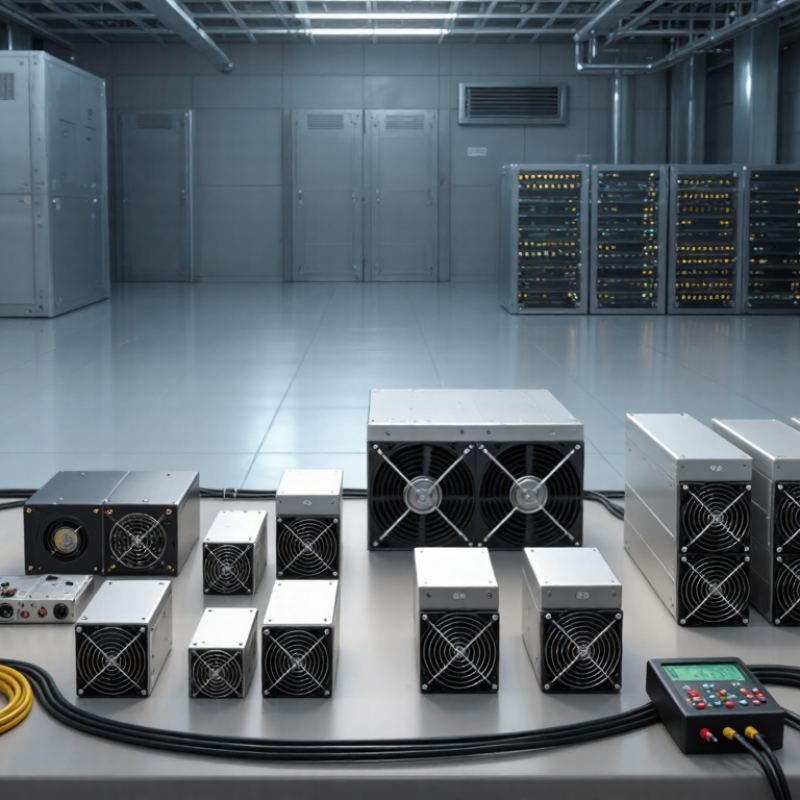
2026 Top Cheap Bitcoin Mining Hardware for Global Buyers

Bitcoin Mining Hardware: Core Components and Operating Principles

Bitcoin Mining Hardware: Core Components and Operating Principles

Affordable Bitcoin mining hardware in 2026 should be judged by efficiency, not purchase price alone. A modern application-specific machine combines hashing chips, several hashboards, a control board, power supply, fans, and firmware. The chips repeatedly process SHA-256 data and search for a valid nonce. Higher hashrate improves probability, while lower joules per terahash reduces electricity cost. The Cambridge Digital Mining Industry Report 2024 estimated Bitcoin mining consumed about 176 TWh annually. It also reported that sustainable energy represented roughly 52.6% of the sector’s electricity mix.

Heat is the practical enemy. A miner drawing 3,000 watts can warm a small room quickly, especially in humid climates. Stable voltage matters too. Cheap hardware may require upgraded wiring, stronger ventilation, or a separate power circuit.

Cambridge’s report also estimated annual mining emissions near 86 million tonnes of CO2. Efficiency is not a marketing detail. It affects operating cost and environmental pressure.

Tips: Compare joules per terahash, noise, warranty terms, and local electricity rates. Check input voltage before importing equipment. Leave airflow around every intake and exhaust. Used units can be economical, but degraded hashboards are difficult to diagnose. I would not trust advertised performance without independent testing. Calculations still fail when cooling costs are ignored.

How to Compare Affordable Mining Devices in 2026

Affordable Bitcoin mining hardware should be compared by operating cost, not purchase price alone. Check the device’s hashrate and energy efficiency, then estimate its daily electricity use from the rated power draw. A low-cost unit can become expensive if it consumes more power for each unit of computing work. Use your actual electricity rate, not a regional average. Small differences matter.

Tips: Compare noise levels, cooling needs, shipping costs, and warranty terms. Ask for clear specifications and verify them against independent testing where available. Keep the room’s ventilation in mind.

Also consider how and where the device will run. A unit producing steady heat may need more space than its size suggests. Check power requirements and whether your setup can support them safely. Mining returns fluctuate with network difficulty, Bitcoin’s price, and electricity costs; no hardware comparison can promise profit. I would be cautious of unusually optimistic earnings estimates. I’ve found that a neat spreadsheet can still miss real-world factors, such as downtime or a hot room. Compare a few realistic scenarios before buying, and leave room for uncertainty.

Top Budget Bitcoin Miners for Different Global Markets

For 2026, cheap Bitcoin mining hardware should mean affordable per terahash, not merely low purchase cost. The Cambridge Digital Mining Industry Report 2024 found that sustainable energy represented about 52.6% of miners’ electricity mix. This makes regional power sourcing increasingly important. Buyers in North America may prioritize efficient units with strong cooling options. European buyers should calculate electricity taxes and higher residential rates. In parts of Asia, Latin America, and Africa, import duties, voltage stability, and repair access can matter more than advertised performance.

Tips: Compare joules per terahash, not only terahashes per second. A lower-efficiency miner can quickly lose its price advantage. Measure the socket, ventilation, and noise level before ordering. The International Energy Agency has estimated global cryptocurrency mining electricity use near 110 terawatt-hours in earlier assessments, showing why energy costs remain central. Always request a written efficiency specification and verify the testing conditions. Cheap hardware often reflects older chip designs. That is not automatically bad, but it requires careful forecasting.

A practical budget setup may work in a low-cost industrial location, yet fail in a hot apartment or unstable grid. Cooling can add substantial electricity use. Shipping damage and delayed replacement parts are also easy to underestimate. I would leave a repair reserve instead of spending every dollar on the machine. Profit calculators look precise, but coin prices, network difficulty, and tariffs change constantly. Even professional forecasts can miss sudden market shifts. Decisions should be tested against conservative electricity prices, not optimistic assumptions.

2026 Top Cheap Bitcoin Mining Hardware for Global Buyers - Top Budget Bitcoin Miners for Different Global Markets

Budget Hardware Category Typical Hashrate Typical Power Draw Approx. Efficiency Indicative Used Price (USD) Best-Fit Market Conditions Key Buying Checks
Older-generation air-cooled SHA-256 ASIC 30–50 TH/s 2.5–3.5 kW About 60–100 J/TH $100–$500 Markets with very low electricity costs, access to surplus power, or a non-commercial learning setup. Check hashboards, fan condition, firmware access, and whether the unit can run on the local electrical supply. High power use per unit of hashrate can make it uneconomic at ordinary retail rates.
Mid-generation air-cooled SHA-256 ASIC 70–100 TH/s 2.8–3.5 kW About 30–45 J/TH $300–$1,200 Buyers in regions with stable, low-cost industrial electricity and suitable ventilation. Compare the seller’s tested hashrate with pool records; inspect for corrosion, repaired boards, and excessive fan noise. Confirm shipping, import duties, and local service options.
Newer-generation entry-level air-cooled SHA-256 ASIC 100–150 TH/s 3.0–3.8 kW About 20–30 J/TH $800–$2,500 North American, Middle Eastern, and other markets where buyers can secure reliable power and manage heat exhaust. Ask for a recent operating test and measured wall power. Check noise limits, warranty terms, and whether the installation circuit can safely handle continuous load.
High-efficiency air-cooled SHA-256 ASIC (budget used or discounted) 150–200 TH/s 3.0–4.0 kW About 17–23 J/TH $1,500–$4,000 Markets with moderate-to-low electricity prices, dependable cooling, and access to appropriately rated electrical infrastructure. Confirm exact operating mode and power setting, since performance and efficiency vary by configuration. Include ventilation, electrical work, and delivery in the total cost.
Hydro-cooled SHA-256 ASIC (used equipment) 150–300 TH/s 3.0–6.0 kW About 17–25 J/TH $2,000–$7,000 Industrial sites in regions with suitable cooling infrastructure, technical support, and low-cost electricity. Not a plug-and-play choice: verify coolant requirements, compatible pumps and heat exchangers, leak protection, and installation costs before comparing purchase prices.
Compact or reduced-power ASIC setup Varies by model and power setting; commonly 30–100 TH/s About 1.0–3.0 kW Model- and setting-dependent $250–$1,500 Small workshops or test setups where lower total power demand matters more than maximum hashrate. Reduced-power operation can lower both hashrate and power draw; request measured figures at the intended setting. Verify noise, heat output, and pool compatibility.

Buyer note: Figures are broad, indicative ranges for SHA-256 Bitcoin ASIC equipment, not guaranteed specifications or live quotations. Used-market prices, network difficulty, Bitcoin price, taxes, shipping, and electricity tariffs vary by country and change over time. Calculate total operating cost using measured wall power and the local electricity rate before purchasing.

Electricity, Cooling, Noise, and Setup Requirements

A low purchase price can hide expensive operating costs. Before choosing inexpensive Bitcoin mining hardware, check its power draw against your local electricity rate. A unit drawing 3,000 watts uses about 72 kilowatt-hours daily if run continuously. Multiply that figure by your rate, then compare it with your realistic operating budget. Leave room for changes in electricity prices and downtime. The arithmetic is plain, but easy to overlook.

Heat needs a plan. A miner can warm a small room quickly, so allow clear airflow around its intake and exhaust. Avoid closets and cramped corners. Dust buildup can restrict airflow, and a simple temperature check helps reveal rising room heat.

Noise matters too. Fans may sound like a steady vacuum, which can disrupt sleep or nearby work. A garage or separate utility space may help, but check its ventilation and electrical capacity first.

Setup is not always plug-and-play. Use a properly rated circuit, keep cables tidy, and follow the equipment’s safety instructions. I would not assume a cheap unit is a bargain until the power, cooling, and noise costs are counted; even then, estimates can be imperfect.

Profitability, Maintenance, and Safe Purchasing Considerations

Cheap Bitcoin mining hardware can look attractive when the purchase price is low. But price alone tells little. Compare each unit’s hash rate with its power draw, then estimate electricity costs using your actual tariff. A miner that runs continuously can add noticeable heat and noise to a small room. Measure the space before buying. Small details matter.

Profitability changes with Bitcoin’s market price, network difficulty, pool fees, and downtime. Treat online calculators as estimates, not promises. Enter realistic electricity rates and allow for cooling costs. Older, inexpensive equipment may consume more power per unit of computing work. It can still suit a buyer with low-cost electricity, but the numbers deserve careful checking. They can turn quickly.

Maintenance is practical, not glamorous. Dust can collect on fan grilles, and loose cables may interrupt operation. Keep equipment in a dry, ventilated area, check temperatures regularly, and follow the manufacturer’s safety instructions. Before paying, verify the seller’s identity, request clear photos of the exact unit, and confirm its operating condition, return terms, and shipping costs in writing. Use a payment method with buyer protections where available. I would also keep a reserve for repairs; that part is easy to overlook.