How to Choose the Best Antminer Container in 2026?

Contact Us

How to Choose the Best Antminer Container in 2026?

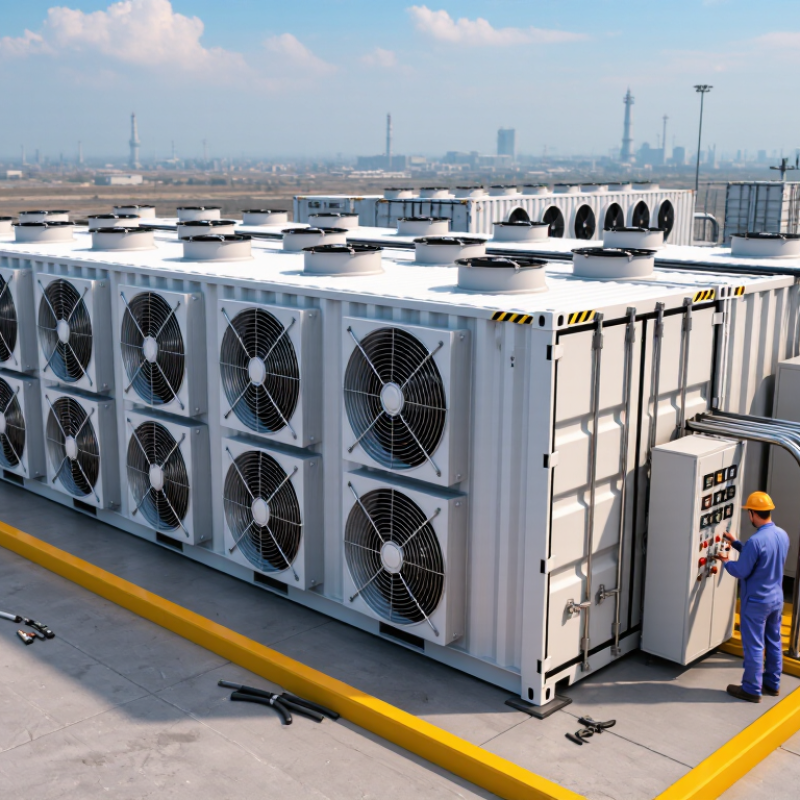
Choosing the best Antminer Container in 2026 requires more than comparing capacity or exterior design. A reliable unit must match your miners, power system, climate, and maintenance routine. A container placed in a hot, dusty region faces different demands from one operating in a cool industrial yard.

Start with the real operating conditions. Measure the total ASIC load, available voltage, airflow path, ambient temperature, and expected expansion. A container holding 100 miners may need stronger cooling than its specification suggests. Heat builds quickly when filters become dirty or fans lose efficiency. Small details matter.

Safety comes first.

Look for fire detection, emergency shutdowns, insulated wiring, weather protection, and clear access around electrical equipment. Independent certifications and documented testing can help verify manufacturer claims. Cooling performance should be supported by measurable data, not attractive marketing images. Noise levels also deserve attention, especially near workers or neighboring facilities.

Field experience shows that maintenance access often influences uptime more than a larger miner count. Operators need room to replace fans, inspect cables, clean filters, and respond to alarms without stopping every machine. Remote monitoring is useful, but it should not replace physical inspections. That assumption can become expensive.

The best Antminer Container is not always the biggest or cheapest option. It is the system that balances efficiency, safety, durability, operating cost, and future flexibility. This guide examines those factors carefully, while acknowledging one practical truth: no container performs perfectly in every environment.
How to Choose the Best Antminer Container in 2026?

Define Load Capacity: Size for 3.5–3.6 kW per S21-Class ASIC

How to Choose the Best Antminer Container in 2026?

Start with the electrical load, not the container’s advertised capacity. An S21-class ASIC should be budgeted at roughly 3.5–3.6 kW during sustained operation. This figure is a planning baseline, not a guaranteed reading. Firmware settings, voltage, temperature, and power-supply efficiency can change consumption. Measure several operating units with a calibrated power meter before finalizing the design.

For 100 machines, the IT load reaches 350–360 kW before fans, controls, lighting, and network equipment. Add those auxiliary loads separately. Then reserve practical electrical headroom, often 10–20%, subject to local engineering rules and utility limits. A container may fit every miner physically but still overload its switchgear. Leave room.

Heat follows electricity closely. Each 3.6 kW miner produces nearly 3.6 kW of heat during operation. Cooling equipment must handle the full load, including hot outdoor conditions and dirty filters. Check airflow paths, fan redundancy, intake clearance, and temperature sensors. The easy mistake is counting machine slots without checking usable power and cooling capacity. That approach looks efficient on paper. It can age badly. Choose a slightly larger electrical and thermal design when measurements remain uncertain.

Compare Cooling Systems: Air, Immersion, and Hydro at 30–40°C Ambient

How to Choose the Best Antminer Container in 2026?

At 30–40°C ambient, cooling capacity becomes the deciding factor for a mining container. Air cooling is simple, familiar, and easier to repair on site. However, hot intake air leaves little thermal headroom. Filters clog quickly in dusty areas, while fans draw more power and produce constant noise. Measure the inlet temperature.

Immersion cooling transfers heat through a dielectric fluid, keeping machines cleaner and reducing fan dependence. It can support stable operation during outdoor heat, but fluid quality, pump reliability, and heat-exchanger sizing require careful control. A small leak or neglected filter can interrupt an otherwise efficient system. Service access also feels different because every machine needs draining and inspection.

Hydro cooling can deliver strong heat removal with compact piping and controlled water flow. At 40°C ambient, though, the dry cooler or chiller still needs enough capacity to reject heat. Water treatment, corrosion protection, and backup pumps are not optional details. They determine uptime. Avoid choosing from rated capacity alone; compare performance at the actual site temperature, altitude, dust level, and electrical load. A useful design includes temperature sensors at the container inlet, outlet, and rack return.

My early calculations often looked too optimistic because they ignored cleaning time and summer peaks. That mistake is easy to repeat. Air may suit a low-complexity deployment, while immersion or hydro can justify higher installation effort when stable heat control matters more than simple maintenance. Noise limits, technician skills, and spare-part access should shape the decision as much as cooling efficiency.

Plan Electrical Infrastructure: Use 415/480 V Distribution and PUE ≤1.10

How to Choose the Best Antminer Container in 2026?

Plan electrical infrastructure before selecting a container. A 415/480 V distribution system can reduce current, cable size, and resistive losses at the same mining load. It also supports cleaner power delivery across long container runs. Confirm every power supply’s input range before ordering equipment. Voltage assumptions can become expensive mistakes.

Design around transformers, switchgear, grounding, surge protection, and branch-level metering. Use properly rated breakers and allow space for maintenance. A PUE of 1.10 means facility overhead stays near ten percent of total energy use. That target is demanding. Cooling fans, pumps, lighting, and transformer losses can quickly consume the allowance. Measure real operating data instead of trusting a spreadsheet. Some efficient designs still miss their target during hot afternoons.

Tips: Request a single-line diagram from the electrical engineer. Check voltage drop at peak load, not average load. Separate monitoring circuits from critical mining circuits. Keep spare capacity for repairs and seasonal changes. Do not oversize blindly; oversized transformers may operate inefficiently. Review protection settings with a qualified professional, and verify installation requirements against local electrical codes. A container may look compact, but its electrical risks are not.

How to Choose the Best Antminer Container in 2026? – Plan Electrical Infrastructure: Use 415/480 V Distribution and PUE ≤ 1.10
Planning Dimension Recommended Design Target Engineering Basis Container Selection Impact Key Verification Point
Primary Distribution Voltage Higher distribution voltage reduces current for the same real power, helping lower conductor losses and voltage drop. Select a container with switchgear, busbars, power distribution units, and branch circuits rated for the local voltage and frequency. Confirm utility service voltage, site frequency, transformer ratio, neutral arrangement, insulation rating, and local electrical code.
Electrical Frequency Mining power supplies and cooling equipment must be compatible with the site frequency; frequency mismatch can affect motors, fans, and protection settings. Avoid treating 415 V and 480 V as interchangeable. The container’s power supplies, fans, transformers, and control equipment must be specified for the actual grid. Check nameplate ratings and obtain written confirmation for any equipment intended for dual-frequency operation.
Illustrative IT Load 350 kW for 100 miners at 3.5 kW each Calculation: 100 × 3.5 kW = 350 kW. Actual miner input varies by model, firmware, operating temperature, and efficiency mode. Choose container capacity from measured or guaranteed input power rather than nominal machine count alone. Allow engineering margin for start-up, replacement units, measurement tolerance, and future operating modes.
Facility Power at PUE ≤ 1.10 Approximately 385 kW for 350 kW IT load Facility power = IT load × PUE. At PUE 1.10: 350 kW × 1.10 = 385 kW. Specify cooling, lighting, controls, pumps, fans, and auxiliary systems so non-IT consumption remains at or below 35 kW in this example. Measure PUE at the facility boundary using the same time period for utility energy and IT energy.
Estimated Full-Load Current About 512 A at 415 V; about 443 A at 480 V Approximation for 350 kW three-phase IT load at 0.95 power factor: I = P ÷ (√3 × V × PF). Actual current depends on power factor and load balance. Use the result to size transformers, switchboards, feeders, disconnects, busbars, and protection devices; do not size only from kW. Apply local requirements for continuous loads, ambient temperature, conductor grouping, fault current, and derating.
Transformer Capacity At 0.95 power factor, 350 kW is approximately 368 kVA before auxiliary load, spare capacity, and future expansion. A 500–630 kVA transformer range may provide practical headroom, but the final rating must include facility load, harmonics, ambient conditions, and expansion plans. Complete a load-flow, short-circuit, transformer heating, and voltage-drop study before procurement.
Power Factor and Harmonics Modern switch-mode power supplies generally provide power-factor correction, but aggregated nonlinear loads can still affect current, heating, and protection coordination. Specify equipment with documented power-factor and total harmonic distortion performance, and consider harmonic-rated transformers where required. Request test data at representative load levels and verify compliance with the applicable grid and electrical standards.
Branch Circuit Arrangement Balanced loading reduces neutral current, voltage imbalance, conductor heating, and nuisance tripping. Prefer modular branch circuits with clear isolation points, metering, and sufficient spacing for maintenance. Verify phase balance under normal operation and after partial population or equipment replacement.
Cooling Architecture For air-cooled mining, cooling performance depends on outside-air temperature, airflow volume, filtration, recirculation control, and fan energy. Choose a container with adequate intake and exhaust area, hot-air containment, washable or replaceable filters, and fan-speed control. Validate rated performance at the site’s design dry-bulb temperature, altitude, dust level, and humidity range.
PUE Objective PUE includes total facility energy divided by IT equipment energy. Low PUE requires efficient cooling, low auxiliary consumption, and accurate metering. Do not claim PUE ≤ 1.10 from a no-load or laboratory test; evaluate the complete operating envelope and seasonal conditions. Install separate utility-side and IT-side meters with synchronized readings and documented measurement boundaries.
Ambient Operating Range Electronics and fans may derate at high ambient temperatures, while low temperatures can create condensation or control issues. Select thermal management based on the worst expected design condition rather than average weather. Review maximum inlet temperature, humidity, altitude derating, condensation control, and emergency shutdown settings.
Protection and Safety High-density continuous loads require coordinated protection and safe isolation for maintenance and emergency response. Specify accessible disconnects, arc-flash labeling, interlocked doors, grounding and bonding, fire detection, and emergency-stop circuits. Complete protection coordination, arc-flash, grounding, and fire-safety assessments according to the site jurisdiction.
Monitoring and Controls Continuous measurements reveal overloads, phase imbalance, rising fan energy, thermal hotspots, and PUE changes. Choose a container with networked meters, environmental sensors, alarm history, remote notifications, and secure control access. Define data intervals, calibration requirements, alarm thresholds, cybersecurity controls, and manual override procedures.
Expansion Allowance Spare capacity reduces the risk of operating continuously at equipment limits and supports phased deployment. Verify that spare capacity exists in the transformer, switchgear, feeders, branch circuits, cooling system, and physical rack layout. Document the usable spare capacity separately from theoretical nameplate capacity.
Acceptance Testing Factory ratings do not prove site performance under real load, local ambient conditions, or actual voltage quality. Make delivery acceptance conditional on load-bank or operational testing, meter verification, temperature mapping, and alarm testing. Record voltage, current, power factor, THD, temperatures, fan power, IT power, auxiliary power, and calculated PUE.
Planning note: The numerical example uses a 350 kW IT load, a 0.95 power factor, and a PUE target of 1.10. Final ratings must be verified by a qualified electrical engineer using the actual miner input power, local utility requirements, environmental conditions, protection studies, and applicable codes.

Verify Safety Standards: Check IEC 60364, UL 508A, Fire, and IP Ratings

Choosing the Best Antminer Container in 2026 requires more than checking capacity and cooling. Safety documentation should be reviewed before comparing prices. IEC 60364 provides a framework for low-voltage electrical installations, including grounding, protection, isolation, and cable selection. Request single-line diagrams, short-circuit calculations, and evidence that local electrical rules are addressed. UL 508A applies to industrial control panels, not automatically to the entire container. That distinction is easy to miss.

Fire protection deserves equal attention.
Specify smoke and heat detection, emergency shutdowns, suitable extinguishing systems, fire-rated separation, and clear access for responders. Confirm whether the design follows local fire codes and relevant data-center guidance. The International Energy Agency’s Electricity 2024 report estimates data-center electricity use could rise from about 415 TWh in 2024 to roughly 945 TWh by 2030. Higher power density also increases thermal and fire risks. Small gaps matter.

Check the enclosure’s IP rating under IEC 60529. IP65 may protect against dust and water jets, but it does not prove fire resistance, corrosion resistance, or safe operation during washdown. Uptime Institute’s 2024 Global Data Center Survey continues to identify power problems among common outage causes, so protection systems must be tested, not merely listed. Ask for inspection records and commissioning results. I would not trust a certificate without its scope. Measure twice.

Compare Total Cost: Measure $/kW, Uptime, Deployment Time, and 5-Year ROI

How to Choose the Best Antminer Container in 2026?

A serious comparison starts with usable power, not the container’s sticker price. Calculate total cost per kilowatt, including cooling, transformers, installation, monitoring, and routine maintenance. A container priced at $95 per kW may become expensive after adding weak airflow and frequent filter replacement. Measure the delivered electrical capacity, not the advertised maximum. Site surveys often reveal cable losses, limited transformer headroom, and unexpected civil work.

Uptime deserves a precise definition. Ask whether the supplier reports mechanical uptime, mining uptime, or total site availability. Review temperature readings from summer and winter operations. A reliable design should maintain stable airflow when ambient temperatures change quickly. Keep spare fans, sensors, and control components nearby. Small failures can become long stoppages. Deployment time also affects revenue. Compare factory testing, delivery access, foundation preparation, wiring, commissioning, and network setup. A container arriving early is useless if the site cannot energize it.

Five-year ROI should use conservative assumptions. Include electricity prices, repair reserves, miner replacement cycles, downtime, taxes, insurance, and resale value. Model several power-price scenarios instead of trusting one forecast. A spreadsheet should show monthly cash flow and break-even time. I have seen projects look profitable until a modest outage rate was added. That uncomfortable result is useful. It exposes weak assumptions before capital is committed. Recheck every input against measured site data, service records, and written performance terms.

How to Choose the Best Antminer Container in 2026?

Comparison of typical containerized mining deployment benchmarks. Lower installed cost and deployment time are better, while higher uptime and five-year ROI are better.

Planning assumptions: 1 MW deployment, $0.05/kWh electricity, 95% operating availability baseline, five-year ownership period, and typical infrastructure, cooling, installation, and maintenance costs. Actual ROI varies with electricity pricing, mining difficulty, asset utilization, climate, and cryptocurrency prices.