How to Choose the Best Container Mining Farm?
Choosing the best Container Mining Farm requires more than comparing machine capacity or advertised electricity prices. A strong decision begins with the site, power source, cooling design, security, maintenance access, and regulatory compliance. The container should operate like a carefully planned industrial facility, not a metal box filled with computers.
Jaran Mellerud, a respected Bitcoin mining analyst, has said, “Bitcoin mining is an energy business.” That observation remains highly practical. A farm beside stable, affordable, and responsibly sourced power may outperform a larger facility with unreliable electricity. Check the transformer capacity, backup systems, ventilation paths, and expected seasonal temperatures. A hot afternoon can expose weak airflow within minutes. Dust can also shorten fan life and increase maintenance costs.
Experience matters here.
The best Container Mining Farm should provide clear performance records, realistic uptime estimates, transparent operating costs, and accessible technical support. Ask how quickly failed hash boards are replaced. Ask who inspects cables, fire controls, and cooling equipment. These details often reveal more than polished sales presentations.
However, no design is perfect. Immersion cooling may reduce heat problems, but it can raise installation complexity and service costs. Air cooling is easier to maintain, yet noise and dust may become serious concerns. The cheapest option may not remain cheap.
A reliable evaluation also considers local permits, worker safety, waste handling, data protection, and environmental responsibilities. Profit projections deserve careful testing. Power prices change. Hardware becomes outdated. Even experienced operators can misjudge these risks. This guide explains how to compare each factor and choose a Container Mining Farm that is practical, compliant, and resilient.
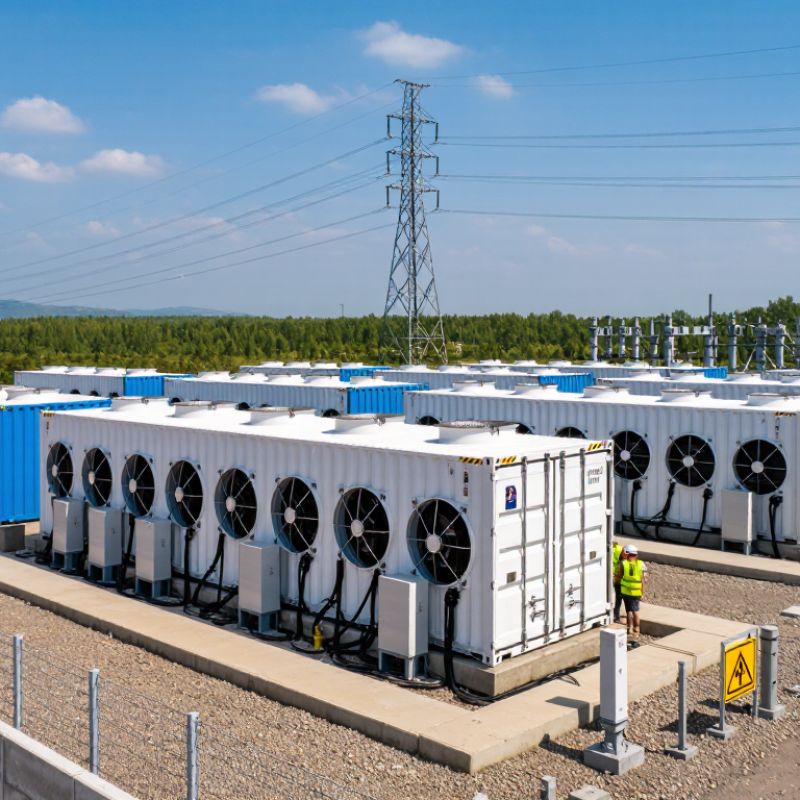
Define Mining Goals: Hashrate, Coin Choice, and 3–4 kW ASIC Power Loads
How to Choose the Best Container Mining Farm?
Define the mining goal before selecting equipment. A target hashrate gives the project a measurable direction. For a small container, a 3–4 kW ASIC power load is a practical starting point. It still demands careful electrical planning. One unit may draw 3.2 kW continuously, producing roughly 77 kWh daily. Multiply that figure by your local electricity rate. Then include cooling, networking, maintenance, and downtime.
Coin choice should follow equipment compatibility, not excitement. Different algorithms require different ASIC designs and operating settings. Study network difficulty, block rewards, market liquidity, and historical volatility. Profitability can change quickly. Avoid relying on one favorable calculator result. I prefer testing conservative prices and higher electricity costs. It feels less attractive, but it reveals weaknesses earlier. Keep records of hashrate, rejected shares, temperature, and actual energy use.
Power quality matters inside a container. Each 3–4 kW load needs suitable circuits, protection, grounding, and professional inspection. Airflow must remove heat without recirculating hot exhaust. Dust filters help, but they also reduce airflow when neglected. I once underestimated fan energy during a hot month. The forecast looked precise. It was not. Leave space for repairs, cable access, and safe movement around equipment. Local electrical and environmental requirements should guide the final layout.
Compare Container Capacity: 20–40 kW Racks and ASIC Density per Unit
Choosing a container mining farm starts with rack power, not container size. A 20 kW rack can support about five ASIC units rated near 3.4 kW each. After cooling and distribution losses, four units may be safer. A 40 kW rack can hold roughly eleven units, but heat removal becomes less forgiving.
The Uptime Institute’s 2023 Global Data Center Survey reported a 1.58 median PUE across surveyed facilities. Mining containers may perform better, yet assuming perfect efficiency is careless. A 40 kW IT load could require nearly 63 kW at that PUE. That difference affects transformers, generators, cabling, and monthly operating costs. Leave physical space between machines. Dust is not theoretical.
ASIC density also changes maintenance risk. A compact 20 kW design offers easier airflow control and simpler fault isolation. A denser 40 kW layout improves floor utilization, but one cooling failure can affect twice as many machines. The Cambridge Centre for Alternative Finance has estimated Bitcoin mining electricity demand in the broad 100–180 TWh annual range in recent updates, highlighting why energy efficiency matters at fleet scale. My practical preference is to calculate both occupied capacity and usable capacity. The numbers rarely match. Five machines may fit on paper, but four may operate more reliably during hot weather, filter loading, or voltage instability.
How to Choose the Best Container Mining Farm? - Compare Container Capacity: 20–40 kW Racks and ASIC Density per Unit
Engineering comparison based on a typical 3.5 kW air-cooled ASIC, 90% maximum continuous IT-load planning, and eight rack positions per 40-foot mining container.
| Container Configuration |
Nominal Rack Power |
Recommended Continuous IT Load
(90% Planning Limit) |
Typical ASIC Power Assumption |
ASICs per Rack |
Rack Power Utilization |
ASICs per 40-Foot Container
(8 Racks) |
Estimated IT Load per Container |
Cooling and Deployment Profile |
Operational Risk |
| Entry-Density Configuration |
20 kW |
18 kW |
3.5 kW per ASIC |
5 |
87.5% |
40 |
140 kW |
Air cooling with generous airflow clearance; suitable for moderate ambient temperatures |
Lower |
| Balanced-Density Configuration |
30 kW |
27 kW |
3.5 kW per ASIC |
7 |
81.7% |
56 |
196 kW |
High-capacity air cooling or assisted ventilation; requires carefully managed hot-aisle exhaust |
Lower to medium |
| High-Density Configuration |
40 kW |
36 kW |
3.5 kW per ASIC |
10 |
87.5% |
80 |
280 kW |
Industrial-grade ventilation, strong heat extraction, and strict temperature monitoring required |
Medium to high |
Calculation basis:
ASIC quantity is calculated by dividing the recommended continuous IT load by 3.5 kW and rounding down to a whole machine.
Estimated container IT load assumes eight identical racks and excludes non-IT loads such as lighting, network equipment, fans, pumps, control systems, and power-conversion losses.
Actual capacity depends on the selected miner's nameplate power, rack PDU rating, cable limits, local electrical code, ambient temperature, airflow design, and available utility capacity.
Evaluate Cooling Systems Through PUE Targets of 1.10–1.30
How to Choose the Best Container Mining Farm?
For a containerized mining farm, PUE should reveal cooling performance, not decorate a proposal. The Green Grid defines PUE as total facility energy divided by IT equipment energy. PUE 1.10–1.30 is ambitious because it includes cooling, distribution losses, lighting, and controls. It does not measure cooling alone. Uptime Institute reported an average PUE of 1.56 in its 2024 Global Data Center Survey. A lower target can therefore indicate disciplined engineering, but only with transparent measurements.
Measure energy at the utility meter and separately at the mining equipment. Log readings every 15 minutes across hot and cool periods. Record inlet temperature, humidity, fan speed, pump load, and rejected heat. ASHRAE TC 9.9 places common recommended inlet conditions around 18–27°C. A container showing 25°C at the door may still hide 32°C near the rear racks. Small details matter. Do not confuse lower fan speed with efficient cooling.
Evaluate monthly and seasonal PUE, not one favorable afternoon. A 1.20 annual result may conceal 1.45 during summer heat. Review parasitic loads from fans, pumps, filtration, controls, and auxiliary power. Independent verification should compare meters with calculated energy bills. One practical mistake is sampling during low-load operation. It creates a beautiful number, but not a reliable one. Set alarms for temperature drift and rising auxiliary consumption. The target needs constant testing.
Verify Power Infrastructure, Uptime Above 99.9%, and Grid Scalability
Choosing a container mining farm starts with the electrical room, not the container. Request single-line diagrams, utility contracts, transformer ratings, and recent power-quality logs. Inspect the site personally. Look for labeled breakers, spare capacity, fire separation, and clear cable routes. A polished tour can hide weak infrastructure.
Uptime must be measured, not promised. A 99.9% target permits nearly 8.8 hours of annual downtime. Ask for twelve months of timestamped outage records, maintenance logs, and generator test results. The Uptime Institute’s Annual Outage Analysis shows that serious outages still create major financial losses across data facilities. Require independent monitoring, automatic failover, and documented recovery procedures. Redundancy on paper is not enough. Check it under load.
Grid scalability matters as miners expand. The IEA’s Electricity 2024 report estimates that data centres, artificial intelligence, and cryptocurrencies consumed about 460 TWh globally in 2022. It projects demand could reach 620–1,050 TWh by 2026. Confirm the farm’s approved import capacity, interconnection timeline, transformer lead times, and future substation options. Ask whether expansion requires a new permit or a simple module addition. Also verify curtailment rules and tariff changes. Cheap power may not remain cheap. One practical warning: a container can be relocated, but contracted grid capacity usually cannot. I would still challenge every forecast, especially when it lacks seasonal data.
How to Choose the Best Container Mining Farm?
Verify power infrastructure, uptime above 99.9%, and grid scalability before deployment.
The screening benchmarks emphasize three practical checks: documented uptime of at least 99.9%, power-system loading kept at or below 85% for operational headroom, and at least 25% reserved electrical capacity for future expansion. These thresholds help assess reliability, cooling stability, maintenance flexibility, and grid scalability without relying on any specific company or brand.
Assess Security, Remote Monitoring, Compliance, and Total Cost per TH/s
How to Choose the Best Container Mining Farm?
A container mining farm should be judged beyond its advertised hash rate. Security begins with reinforced doors, camera coverage, controlled access, smoke detection, and reliable fire protection. Network security also matters. Use separate management networks, multi-factor authentication, and encrypted connections. A locked container is not enough.
Remote monitoring should show hash rate, power draw, temperature, fan status, and rejected shares in real time. Alerts must reach an operator before heat becomes equipment damage. From practical operations, clear dashboards reduce unnecessary site visits. However, remote systems can fail. Keep local alarms, backup internet, and manual shutdown procedures available. That detail is easy to overlook.
Compliance affects the farm’s real operating cost. Verify zoning, electrical approvals, noise limits, environmental requirements, taxation, and energy contracts before deployment. Rules vary by location and can change. Obtain written guidance from qualified local professionals. Calculate total cost per TH/s, not only the purchase price. Include hardware, transformers, cooling, rent, labor, connectivity, repairs, insurance, downtime, and electricity. Review the figure over twelve months. Early spreadsheets often underestimate maintenance and seasonal cooling demand.
Tips: Request recent uptime records, inspection documents, and a sample monitoring report. Test alert response during a site visit. Compare at least three cost scenarios: normal operation, higher power prices, and extended downtime. There is no perfect model. Good decisions leave room for unpleasant surprises.