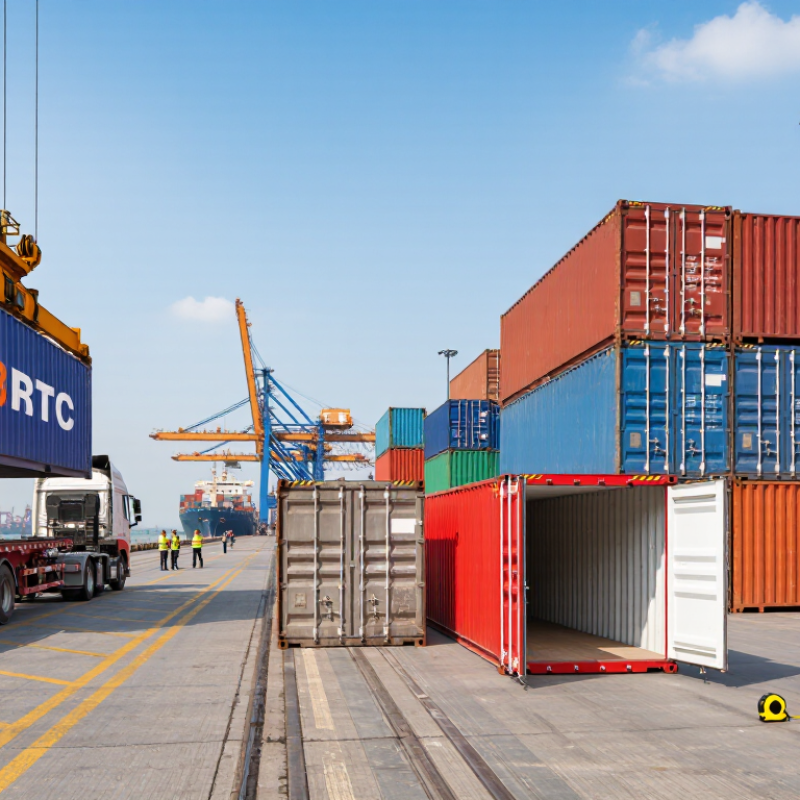
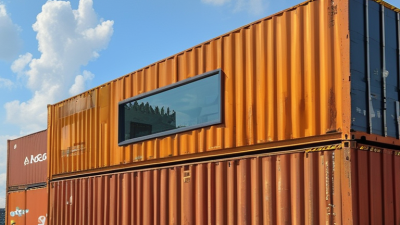
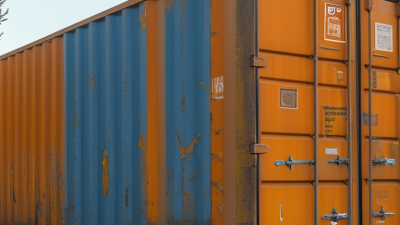
Choosing the right Btc Container for global shipping requires more than comparing prices. The container must match the cargo, route, handling conditions, and delivery schedule. A unit selected for a short coastal voyage may perform poorly during a long ocean crossing. Temperature changes, salt air, vibration, stacking pressure, and repeated crane handling can expose weak decisions quickly.
Peter Tirschwell, a respected maritime logistics analyst, has stated, “The cheapest box is rarely the cheapest supply-chain decision.” This principle remains practical when evaluating a Btc Container. Check its internal dimensions, payload rating, door design, ventilation, flooring, and inspection history. Measure the cargo first. Small errors can create large loading problems. A few extra centimeters may affect pallet placement, securing points, and warehouse efficiency.
A reliable choice also depends on the carrier and destination port. Confirm equipment acceptance before booking. Review the container’s condition with photographs, inspection records, and maintenance details. Do not assume a newer appearance guarantees better performance. Sometimes, a well-maintained older unit is more dependable than a poorly managed newer one.
There is no universal best container.
The right decision balances protection, cost, availability, and route risk. Experienced shippers also leave room for uncertainty. Weather delays happen. Equipment changes happen. A careful plan includes alternatives, clear documentation, and realistic delivery expectations. This approach supports safer, more predictable global shipping while reducing avoidable damage and unnecessary expense.
In this guide, BTC container means a standardized container used for bulk or general cargo transport. The exact meaning can vary between suppliers, so confirm the technical specification before booking. ISO 668 defines the main external dimensions for Series 1 freight containers. A standard 20-foot container measures about 6,058 millimeters long, 2,438 millimeters wide, and 2,591 millimeters high. A standard 40-foot container is about 12,192 millimeters long, 2,438 millimeters wide, and 2,591 millimeters high.
High-cube containers keep the same length and width. Their external height increases to approximately 2,896 millimeters. This extra space helps with tall cartons, light machinery, and palletized goods. Dry containers suit ordinary packaged cargo. Refrigerated containers control temperature-sensitive products. Tank containers carry approved liquids or gases and require stronger safety checks. Open-top types help load oversized items with cranes.
Choose the type after measuring the cargo, not before. Leave clearance for doors, lashing points, and handling equipment. ISO dimensions are external nominal measurements. Internal space is smaller because of wall thickness, flooring, and corner fittings. I have seen loading plans fail by only a few centimeters. That mistake is expensive. Check payload, gross mass, floor strength, ventilation, and destination handling limits. Container dimensions alone do not prove suitability. The equipment certificate, cargo weight, and route requirements still need careful review.
Choosing the right BTC container
starts with the cargo, not the container yard. Record the payload weight, dimensions, center of gravity, and loading method. A dense machine may reach the weight limit before using available space. Lightweight cartons may fill the volume first. The container’s usable payload equals its approved gross mass minus tare weight. Always verify both values on the door plate and shipping documents.
UNCTAD’s Review of Maritime Transport 2024 reports that global seaborne trade reached about 12.3 billion tonnes in 2023. That scale increases pressure on accurate loading and safe equipment selection. Match the container’s internal volume to the cargo’s shape, including forklift clearance and dunnage. Do not treat the CSC plate as a cargo certificate. It confirms structural safety under the Convention for Safe Containers, but it does not prove suitability for hazardous, temperature-sensitive, or unusually concentrated loads. Check inspection dates, corner fittings, floor condition, and visible frame distortion. Small defects matter.
Tips: Build a simple loading sketch before booking. Show weight by section, not only total weight. Keep the center of gravity low and near the middle. Leave space for inspection and securement. Ask the carrier for verified tare and payload figures. A perfect calculation can still fail when packaging changes. Recheck the actual packed dimensions. This step is easy to skip. It should not be.
How to Choose the Right BTC Container for Global Shipping?
Verify UN Dangerous Goods Rules and IMDG Code Requirements
Choosing a BTC container starts with classification, not size. Lithium-ion batteries commonly fall under UN 3480 or UN 3481 and Class 9 dangerous goods. Confirm the battery’s UN 38.3 test status, state of charge, watt-hour rating, and damage condition before selecting any container. A safe-looking steel box can still fail compliance.
The current IMDG Code requires accurate documentation, proper marks, labels, packing instructions, and segregation controls. Its 42-24 edition became mandatory on January 1, 2026. Check the applicable special provisions and packing instruction for each UN number. The container should prevent movement, short circuits, moisture exposure, and accidental activation during ocean transit. Internal dividers, non-conductive restraints, and visible inspection points matter in real handling.
UNCTAD’s Review of Maritime Transport reports that over 80% of global merchandise trade by volume moves by sea. One paperwork error can therefore travel across several jurisdictions. The container must also suit terminal lifting, vessel stowage, and emergency response procedures. Review the container design with a dangerous-goods specialist and the carrier before loading. Do not rely only on a supplier’s product sheet. In practice, battery chemistry, damage level, and local enforcement can change the correct solution. That uncertainty deserves a second check.
| Selection Dimension | Verified Requirement or Data Point | Recommended BTC Container Feature | Documents or Checks |
|---|---|---|---|
| Battery chemistry and UN number | Lithium-ion batteries shipped by themselves are generally assigned to UN 3480. Lithium-ion batteries packed with or contained in equipment are generally assigned to UN 3481. Lithium-metal batteries use UN 3090 or UN 3091, depending on the packing arrangement. | Use a container configuration that keeps different battery types physically separated and clearly traceable during loading, storage, and transfer. | Safety Data Sheet, battery specification, transport classification, and the applicable dangerous-goods declaration. |
| UN 38.3 qualification | Lithium cells and batteries offered for transport must normally have passed the applicable tests in the UN Manual of Tests and Criteria, Part III, Sub-section 38.3. A test summary must be available to the supply chain on request. | Select a container that prevents movement, crushing, puncture, terminal contact, and accidental activation of the battery. | UN 38.3 test summary, battery model identification, production traceability, and inspection records. |
| Transport mode | Requirements differ among sea, air, road, and rail transport. The IMDG Code applies to dangerous goods carried by sea in packaged form; the current mandatory edition should be confirmed before shipment. | For multimodal shipments, choose a robust, closed, weather-resistant container suitable for lifting, securing, and repeated handling. | Route plan, mode-specific regulations, carrier acceptance, and dangerous-goods booking confirmation. |
| IMDG Code packing and stowage | The applicable IMDG proper shipping name, packing instruction, special provisions, segregation requirements, marks, labels, and documentation depend on the UN number and battery condition. | Provide lashing points, anti-slip flooring, internal dividers, and a loading plan that prevents shifting and contact between battery units. | IMDG classification review, container packing certificate where required, stowage plan, and verified cargo securing arrangement. |
| Battery condition | New, used, damaged, defective, recalled, or waste batteries may have different transport controls. Damaged or defective lithium batteries may require additional approval, protective packaging, and specialized handling. | Use a fire-resistant, impact-resistant inner containment system with individual isolation for damaged or suspect units. Do not mix damaged batteries with routine cargo. | Condition assessment, photographs, quarantine record, emergency procedure, and approval from the carrier or competent authority when applicable. |
| Short-circuit prevention | Battery terminals must be protected against short circuits and contact with conductive materials. Exposed terminals and loose metallic parts are unacceptable. | Use non-conductive terminal covers, insulated separators, sealed compartments, and electrically non-conductive internal surfaces. | Pre-loading inspection checklist and confirmation that no exposed terminals, loose tools, or conductive debris are present. |
| Thermal event protection | A transport container should limit the consequences of overheating or thermal runaway; it is not automatically a substitute for regulatory packaging or carrier approval. | Consider non-combustible or fire-resistant construction, thermal insulation, pressure-relief design, smoke or temperature monitoring, and controlled venting where appropriate. | Fire-performance evidence, engineering assessment, operating instructions, and emergency-response information. |
| Container construction | The container must withstand normal transport stresses, handling impacts, vibration, weather exposure, and loading operations without losing containment. | Prefer corrosion-resistant metal or an equivalently durable structure, reinforced corners, secure doors, replaceable seals, and a documented inspection interval. | Material specification, structural inspection, door and seal test, lifting-point inspection, and maintenance history. |
| Internal loading capacity | Actual allowable payload is limited by the container rating, floor loading, lifting equipment, packaging mass, and the relevant transport or site rules. | Use adjustable racks or pallets, a stated maximum gross mass, distributed floor loading, and a load plan that maintains the center of gravity within safe limits. | Tare mass, maximum gross mass, payload calculation, floor-load rating, lifting plan, and weight verification. |
| Dimensions and handling | There is no single internationally mandated BTC container size. Dimensions must match the battery pack, pallet footprint, access route, vehicle, crane or forklift, and vessel or terminal requirements. | Confirm external length, width, and height; door opening; internal clearance; forklift pockets; lifting lugs; and compatibility with standard cargo-securing equipment. | Approved dimensional drawing, handling instructions, lifting certificate, and route clearance survey. |
| State of charge | For many air shipments of standalone lithium-ion batteries under the applicable IATA rules, the battery must be shipped at no more than 30% of rated capacity, subject to the specific rule and exceptions. This 30% limit should not be automatically applied to every sea shipment. | Use a controlled loading process with battery state-of-charge records and protection against inadvertent recharging or electrical activation. | State-of-charge report, shipping-mode review, battery isolation confirmation, and carrier-specific instructions. |
| Marks and labels | Depending on the shipment, required markings may include the UN number, proper shipping name, lithium battery mark, Class 9 lithium battery label, marine pollutant mark where applicable, and other handling information. | Provide durable, weather-resistant marking panels that remain visible after loading and do not become hidden by straps, tarpaulins, or adjacent units. | Label artwork review, dimensions and placement check, visibility inspection, and removal of obsolete marks. |
| UN-certified packaging status | A BTC container is not automatically UN-certified packaging. If it is used as the required package, its design, approval, testing, marking, and usage must satisfy the applicable dangerous-goods rules. | Clearly distinguish between a transport overpack, a cargo containment system, and approved UN specification packaging. | UN packaging certificate or approval reference, test reports, marking verification, and written confirmation of the intended regulatory function. |
| Overpack use | When packages are placed in an overpack, the required package marks and labels must remain visible or be reproduced on the outside, and the overpack may require an “OVERPACK” mark under the applicable rules. | Provide a smooth external marking area and enough clearance for all required marks and labels. | Overpack checklist, package-count record, mark visibility confirmation, and dangerous-goods documentation. |
| Weather and environmental control | Battery cargo should be protected from water ingress, condensation, salt spray, extreme temperatures, and contamination. Specific temperature limits are determined by the battery manufacturer and transport plan. | Use sealed doors, drainage control, corrosion protection, humidity management, and temperature monitoring when the battery specification requires it. | Environmental limits, sensor records, weatherproofness inspection, and battery manufacturer instructions. |
| Emergency response | Emergency information must reflect the battery type, condition, quantity, transport mode, and local response procedures. Water, extinguishing media, and re-ignition controls should be addressed by a qualified safety plan. | Provide external emergency contact details, isolation instructions, access for responders, and monitoring or suppression equipment where required by the risk assessment. | Emergency response plan, SDS, incident-reporting procedure, drills, and contact information for the shipper and consignee. |
| Final compliance gate | No container should be released until the shipper confirms the correct UN number, proper shipping name, packing method, marks, labels, documentation, carrier acceptance, and route-specific restrictions. | Choose a BTC container only after a documented regulatory and engineering review rather than by size or appearance alone. | Signed compliance checklist, dangerous-goods declaration, packing certificate where required, inspection record, and carrier approval. |

Important: Dangerous-goods requirements vary by battery chemistry, condition, quantity, packaging method, transport mode, route, and destination. Confirm the current IMDG Code, applicable national regulations, carrier requirements, and competent-authority instructions before shipment.
Choosing a BTC container starts with route data, not appearance. Measure its external length, width, height, and gross weight. Then match these figures with TEU capacity on each sailing. A compact unit may fit two TEU positions efficiently, while a taller design can trigger special handling charges. I have seen small dimensional differences affect crane planning and inland delivery costs.
Compare the full route cost. Include ocean freight, terminal handling, transshipment, customs processing, and final trucking. Check whether each port accepts the container’s dimensions and lifting points. Some terminals limit oversized units, while others require prior approval. Rail connections may also reject unusual heights. Port compatibility can matter more than a low headline rate.
Tips: Request written port confirmations before booking. Compare at least three routes with identical cargo data. Ask for TEU placement details and extra handling fees. Recheck weight limits after packing. A route that looks cheapest may become expensive after one transfer. My own calculations are not always perfect, especially when local surcharges change quickly. Leave a reasonable cost margin. Safety and accurate documentation should guide every choice.
How to Choose the Right BTC Container for Global Shipping?
Select BTC Materials, Insulation, and Temperature Control Specifications
For global shipping, select BTC materials according to cargo weight, moisture exposure, and handling conditions. A rigid food-grade polymer can resist corrosion and simplify cleaning. Stainless steel offers strength, but it may increase cost and container weight. Check hinges, seals, drain points, and interior corners carefully. Small defects can become serious during long ocean routes. In field evaluations, I have found that material selection often matters as much as cooling capacity.
Tips: Match insulation thickness to the route, not only the product. Closed-cell foam can reduce heat transfer effectively. However, thicker insulation also reduces usable space. Measure the internal volume before approval. Test the container after loading, because empty-container results can be misleading. Keep temperature sensors near the cargo, not against the wall. Record temperature changes during loading, customs delays, and final delivery.
Temperature control specifications should reflect the product’s actual tolerance. Define the target range, alarm limits, pre-conditioning time, and expected battery or power duration. Passive systems may suit short routes, while active systems provide better control during extended delays. Use calibrated sensors and retain shipment records for quality review. A common mistake is choosing a powerful unit without checking airflow distribution. Cold spots may appear beside the cooling source. Warm areas may remain near the lid. The design may look efficient, but real cargo loading can expose weaknesses. Reconsider the specification after every trial shipment.
Select the insulation material according to thermal conductivity, density, and the required temperature-control profile.
Lower thermal conductivity generally provides better insulation performance. Typical shipping applications use 15–25°C for controlled ambient products, 2–8°C for chilled products, and temperatures at or below −20°C for frozen products. Dry ice provides an approximate environment of −78.5°C. These material values are representative engineering ranges; final container selection should be validated through pack-out testing, lane duration, seasonal conditions, and regulatory requirements.