7 Tips to Choose the Best Bitcoin Miner Store
Choosing the right Bitcoin Miner Store requires more than comparing advertised hash rates. A reliable purchase begins with evidence, clear specifications, and realistic operating costs. Buyers should examine the miner’s hash rate, power consumption, algorithm, noise level, and expected heat output. A small room can quickly become uncomfortable when several high-powered machines run continuously. Details matter.
This guide presents seven practical tips for evaluating sellers with greater confidence. It considers product authenticity, warranty coverage, return terms, shipping information, payment security, technical support, and customer feedback. Independent reviews and manufacturer documentation can reveal inconsistencies that polished product pages may hide. A trustworthy store should explain efficiency figures under stated conditions, not promise effortless profits. That is not enough. Electricity prices, network difficulty, equipment maintenance, and market volatility affect every calculation. Even careful buyers can misread projected returns when they ignore ventilation or downtime. I have found that simple checklists often outperform exciting claims, although no checklist removes every risk. Read the fine print. Look for verifiable business details, responsive communication, and service policies written in plain language. A professional Bitcoin Miner Store should help customers understand limitations before payment, not pressure them with urgency. The following tips are designed to support informed decisions, responsible budgeting, and safer long-term planning. They do not guarantee profitability, but they can reduce avoidable mistakes.
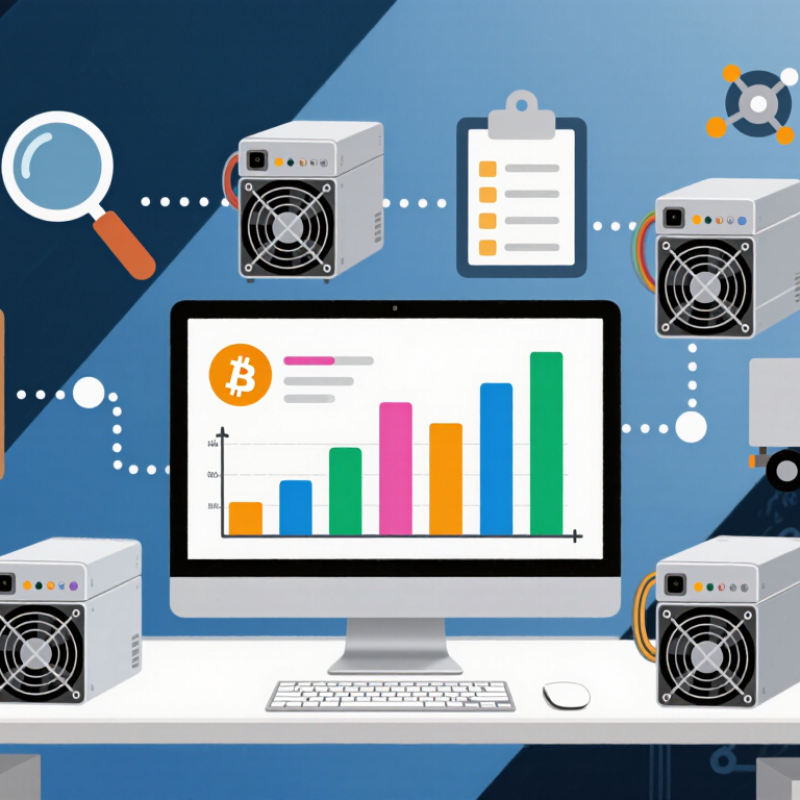
Understanding What Makes a Bitcoin Miner Store Reliable
7 Tips to Choose the Best Bitcoin Miner Store
Understanding What Makes a Bitcoin Miner Store Reliable
A reliable Bitcoin miner store makes technical details easy to verify. Check hashrate, power draw, algorithm, efficiency, noise, and operating temperature. Do not trust attractive figures alone. Ask for test conditions and recent performance records. The Cambridge Centre for Alternative Finance tracks Bitcoin’s substantial electricity demand, while the IEA’s Electricity 2024 report projects data centres, AI, and crypto could exceed 1,000 TWh annually by 2026. Energy efficiency matters.
Look for clear stock status and realistic dispatch dates. A photographed warehouse is not enough. Request a serial number, invoice, and sealed-package evidence before payment. Review the warranty carefully. It should explain coverage, inspection fees, shipping responsibility, and repair timelines. Return terms must address defective equipment, damaged packaging, and mismatched specifications. Small details reveal store discipline.
Support quality is another practical test. Send a technical question before ordering. A professional reply should discuss circuit capacity, ventilation, firmware, and safe operating limits. Secure payment methods and a verifiable business address also reduce uncertainty. Be cautious with unusually low prices. They may hide missing accessories, refurbished units, or unclear import costs. I once focused too heavily on price; that was a costly assumption. A better check is comparing total ownership cost, including electricity, cooling, maintenance, and downtime. Store reviews help, but they can be incomplete. Verify claims independently.
Comparing Miner Types, Performance, and Hardware Specifications
7 Tips to Choose the Best Bitcoin Miner Store
Comparing miner types is more important than choosing the lowest price. Application-specific miners usually deliver stronger Bitcoin performance than general-purpose graphics hardware. However, they often create more heat, noise, and electrical demand. Graphics-based systems may offer flexibility, but their Bitcoin output is usually less competitive. Immersion-cooled equipment can reduce noise and improve thermal control, yet it requires specialized tanks, fluids, and maintenance.
Check hashrate, measured in terahashes per second, and compare it with power efficiency. A lower joules-per-terahash figure generally means less electricity for similar output. Do not trust hashrate alone. Examine the power supply rating, operating voltage, cooling design, fan quality, and expected uptime. A miner running at high temperature may lose performance or shorten component life. Small details matter.
I would also inspect the store’s technical documentation and testing process. Clear specifications, serial tracking, realistic delivery terms, and responsive support signal stronger reliability. Ask whether the unit was tested under load, not merely switched on. That distinction matters. Calculate daily electricity costs before ordering, using your local rate and expected operating hours. I have seen buyers focus on advertised performance and overlook wiring limits, room ventilation, or maintenance time. That mistake is easy to make. Even careful comparisons can miss repair costs or changing network conditions. Recheck the figures before purchasing.
Evaluating Prices, Warranty Coverage, and Return Policies
A serious Bitcoin miner purchase begins with the total cost, not the sticker price. Compare the machine price, shipping, import fees, power supply, and expected electricity use. The International Energy Agency’s Electricity 2024 report estimates that data centres, cryptocurrency mining, and artificial intelligence used about 460 TWh globally in 2022. Ask for a realistic efficiency figure in joules per terahash. Check prices across several sellers on the same day, because mining hardware values can change quickly. A low price may hide older stock, missing accessories, or expensive delivery.
Read the warranty before paying. Confirm its length, covered parts, repair location, shipping responsibility, and exclusions for dust, voltage problems, or continuous operation. Request the serial-number procedure in writing. Also examine the return policy like a contract, not an advertisement. The National Retail Federation and Appriss Retail reported that 14.5% of retail sales were returned in 2023, representing approximately 743 billion dollars. Ask whether opened equipment qualifies, who pays return freight, and when refunds are issued. Keep screenshots of the listing and every message. Small details matter. I would also check whether testing fees, restocking charges, or damaged-packaging rules reduce the refund. A mistake I would reconsider is trusting “30-day returns” without reading the conditions; that phrase can still exclude powered-on mining equipment.
Checking Store Security, Reputation, and Customer Support
A secure Bitcoin miner store should make verification easy, not mysterious. Check HTTPS, clear payment terms, and a privacy policy before sharing personal information. IBM’s Cost of a Data Breach Report 2024 placed the global average breach cost at 4.88 million dollars. That figure is not store-specific, but it shows why basic security matters. Use a payment method with dispute protection. Avoid sellers requesting irreversible transfers only.
Reputation needs evidence beyond a polished homepage. Search independent review platforms, complaint databases, and industry forums. Check whether reviews mention delivery dates, damaged equipment, refunds, and warranty handling. The FBI’s 2024 Internet Crime Report recorded 859,532 complaints and 16.6 billion dollars in reported losses. Fraud often begins with trust signals that look convincing. I still sometimes overvalue professional design. That is a mistake. Compare the store’s business registration, physical address, domain age, and published return policy.
Customer support should be tested before purchase. Send specific questions about power requirements, shipping insurance, repair procedures, and response times. A useful store should provide precise answers, not copied promises. Ask for the warranty period in writing. Check who pays return shipping. Save invoices, chat records, and product serial details. Seven practical checks help: secure checkout, privacy terms, independent reviews, complaint history, business identity, support quality, and warranty clarity. No response is also information.
Making the Final Purchase Decision Based on Mining Goals
The final purchase should match your mining goal, not a flashy specification sheet. Decide whether you want home learning, small-scale income, or industrial deployment. Then compare seven points: hash rate, energy efficiency, electricity price, noise, heat, uptime support, and delivery reliability. A miner rated at 200 TH/s may look powerful, but its daily power bill can erase expected revenue.
Efficiency deserves careful attention. Hashrate Index commonly compares machines by joules per terahash, a useful measure for operating cost. Lower is better. The Cambridge Centre for Alternative Finance has estimated Bitcoin mining electricity demand in the tens to over one hundred terawatt-hours annually, depending on network conditions. That scale shows why electricity planning matters. Calculate power consumption using your local tariff, then test several Bitcoin price and network difficulty scenarios. Be conservative. Many buyers are not.
Inspect the seller’s technical evidence before paying. Request serial-number verification, testing videos, warranty terms, repair procedures, and delivery timelines. Check whether the quoted hash rate reflects laboratory performance or sustained operation. The Bitcoin Mining Council reported a 54.5% sustainable electricity share in its Q4 2023 survey, although its voluntary sample may not represent the entire industry. Treat such figures as context, not certainty. A purchase makes sense only when your target—learning, steady cash flow, or long-term capacity—still works after pool fees, cooling costs, downtime, taxes, and a weaker market price. Buy for your actual conditions. Not optimistic ones.
7 Tips to Choose the Best Bitcoin Miner Store: Match the Purchase to Your Mining Goal
The chart shows a practical 100-point decision model for comparing Bitcoin miner stores. Home miners should prioritize energy efficiency, noise control, and support, while cost-focused buyers should give more weight to total price and power consumption. High-performance and scalable operations should emphasize efficiency, availability, warranty coverage, and after-sales service.